



Water lilies in the pond
Added 25.1.2026 11:01.27 Views count 245
Water lilies (genus Nymphaea) are among the most popular aquatic plants for garden ponds. They not only add aesthetics and color, but also have an important ecological function, supporting the balance of the entire ecosystem.
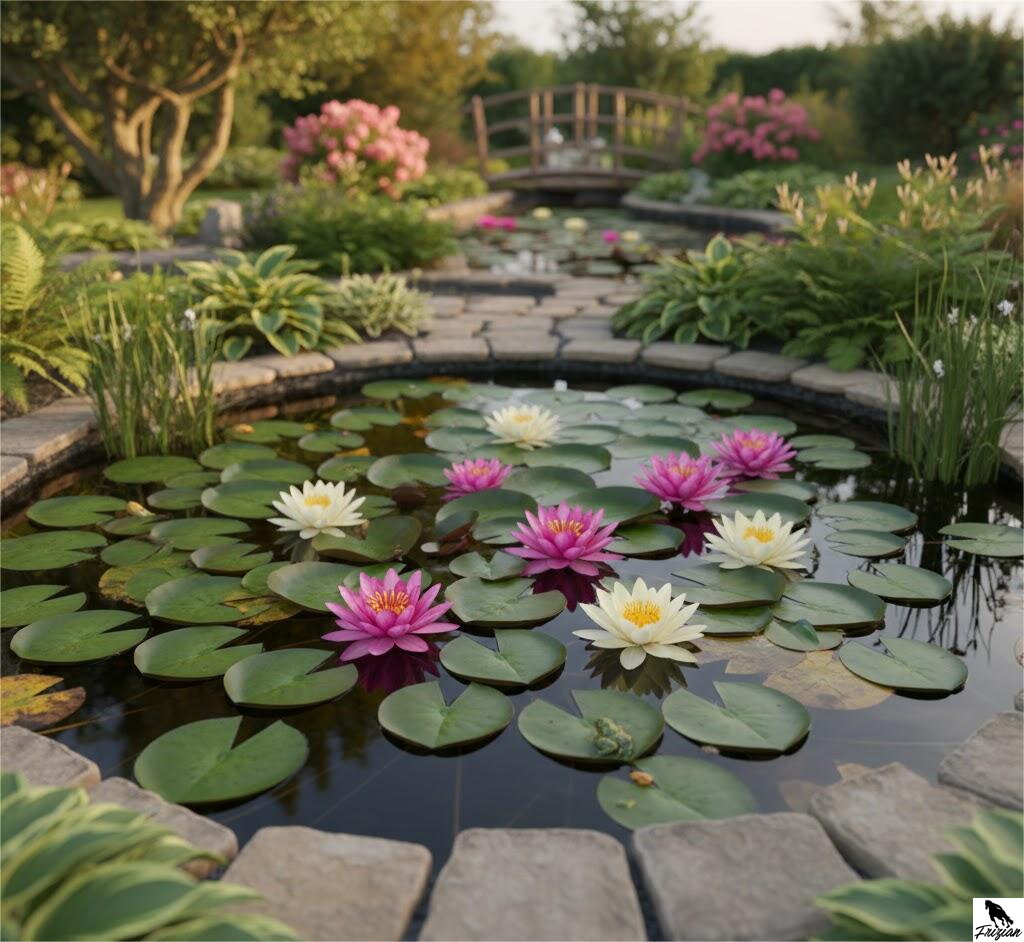
HOW DO WATER LIPS "WORK" IN A POND?
Water shading
Their leaves float on the surface, reducing direct sunlight on the water,
preventing excessive algae growth.
Oxygenation and filtration
They produce oxygen through photosynthesis,
the root system filters the water from impurities and nutrients.
Habitat for animals
They provide shelter for fish, amphibians and insects,
reducing stress for fish in the pond.
Water temperature regulation
They shade the surface, which helps maintain a stable temperature, especially in summer.
🏠 WATER LIPS REQUIREMENTS
🌞 Light
Requires full sun or partial shade (6–8 hours of light per day)
Lack of light → poor flowering and slow growth
💧 Water
Temperature: optimal 18–28 °C
pH: neutral to slightly acidic (6.5–7.5)
Depth: from 20 cm to 1 m depending on the variety
🌱 Substrate
Rich clay substrate or special peat mixture
Minerals: added phosphorus and potassium promote flowering
🧹 Maintenance
Removal of dead leaves
Dividing root tubers every 2–3 years
🧠 WATER LIPS "NATURE"
Calm and stable plants
Robust, but sensitive to overcrowding and polluted water
Prefers balance - neither too shallow nor too deep water
Flowers are sensitive to mechanical damage
🧱 WATER LIME SPECIES
Tropical water lily (Nymphaea tropica)
Brightly colored flowers, fragrant, blooms in summer
Requirements: warm water >22 °C, regular fertilization
Local (traditional European water lily)
White, light pink flowers, less demanding
Cold-resistant
Mini water lily / floating
Leaves and flowers smaller, suitable for small ponds
Hybrids
Combination of large flowers, color and resistance
🩺 IMPACT OF WATER LIME ON POND HEALTH
POSITIVE
✔️ shading reduces algae
✔️ stabilizes temperature
✔️ provides shelter and habitat for fish
✔️ filters water through the root system
NEGATIVE
❌ too dense growth can reduce oxygen at night
❌ leaf decomposition can pollute the water if not removed
🦠 WATER LIPS "DISEASES" AND PROBLEMS
Brown or damaged leaves → lack of light or nutrients
Leaf decay → excessive algae
Snail or insect infestation
Fungal diseases in stagnant water
➡️ prevention: regular fertilization, optimal density, removal of dead parts
⚖️ ADVANTAGES AND DISADVANTAGES OF WATER LIPS
👍 ADVANTAGES
✅ aesthetic appearance
✅ ecological water regulation
✅ shelter and protection of fish
✅ dampens sunlight and temperature fluctuations
👎 DISADVANTAGES
❌ need for maintenance (cutting, fertilization)
❌ overcrowding can reduce oxygen
❌ susceptible to diseases if poorly cared for
🛒 HOW TO CHOOSE THE RIGHT WATER LIPS
Pond size and water depth
Type of fish and other inhabitants
Climate conditions (tropical vs. hardy)
Number of plants – ideally 1 water lily for 1–2 m² of surface
Maintenance and fertilization plan
📌 Tip: For small ponds, choose mini or medium varieties, for large ponds, resistant hybrids with large leaves.
🧭 PRACTICAL TIPS
Remove fallen leaves and flowers
When planting, use peat and pebbles to stabilize the tubers
Avoid fertilizing directly into the water when there are fish
Monitor the ratio of water lilies to open surface - ideally 50%
📌 SUMMARY
Water lilies are not only an ornament, but also an ecological regulator of the pond.
Correctly chosen and maintained:
regulate algae,
provide shelter for fish,
stabilize the temperature and ecosystem.
Without water lilies: the pond is prone to algae, temperature fluctuations and stress for fish.