



Uromastyx
Added 25.1.2026 19:38.12 Views count 270
(Uromastyx), often called spiny-tailed lizards, are a genus of agamid lizards native to the arid and desert regions of Africa, the Middle East, and the Indian subcontinent. These terrestrial, diurnal, and mostly herbivorous lizards are some of the most interesting reptiles kept as home terrarium pets — but successfully keeping them requires an understanding of their specific biological and ecological needs.
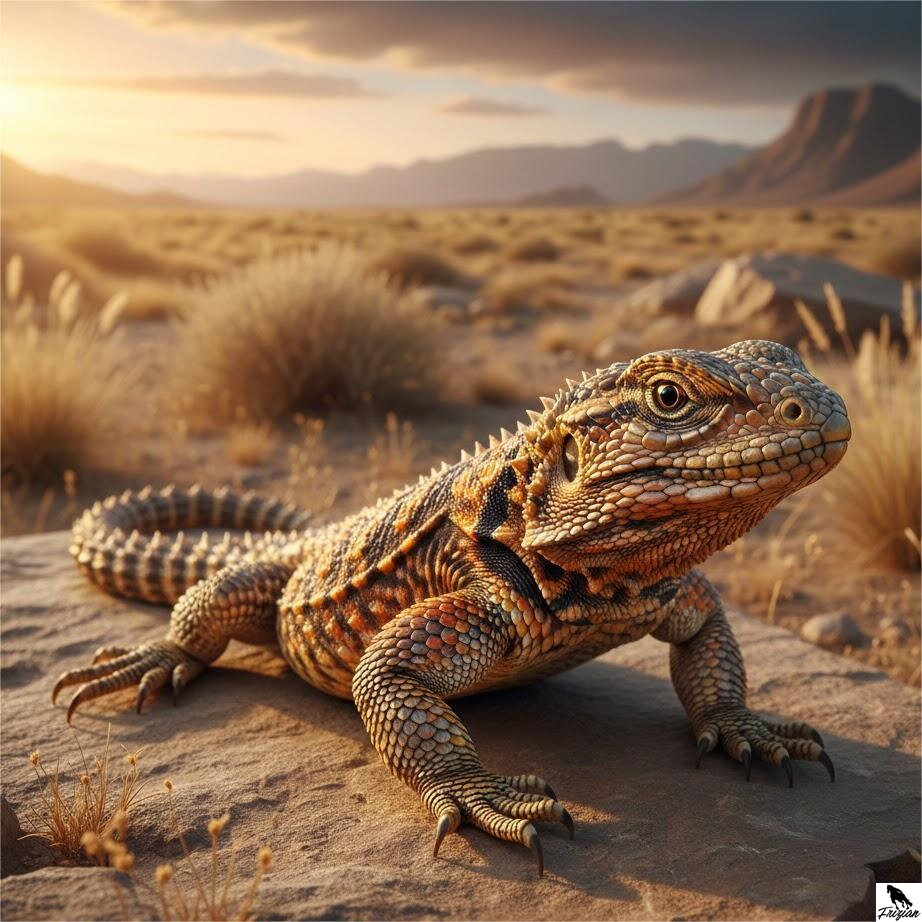
🐢 1. What they look like and basic characteristics
Size: Species of the genus Uromastyx vary in size — from smaller ones around 25 cm to larger ones up to 90 cm or more in length, including the tail.
Appearance: They have a broad, robust body, a large head, and a characteristic strong, spiny tail that serves as a defense tool against predators.
Color: Color can vary depending on the species, temperature, and season; in the wild, it also serves as a thermoregulation tool (darker colors absorb more heat).
Daily rhythm: They are diurnal — active during the day when they bask and forage for food.
These lizards have adaptations for living in extremely dry climates — thicker skin to reduce moisture loss, the ability to obtain most of the water from their diet, and oral salt-secreting glands near the nostrils that help eliminate excess minerals without losing water.
🌍 2. Origin and habitat in nature
Bear-eared lizards inhabit arid and semi-arid areas with rocky or sandy substrates, where they create deep burrows and shelter from extreme heat and predators. Many species also use their powerful tail as a weapon against predators (flea strikes), although these strikes usually do not result in serious injury, but serve as an effective deterrent.
🦎 3. Common species and variations
The genus Uromastyx contains several species and subspecies, some of which are often bred in captivity or mentioned in the literature:
🐊 Uromastyx aegyptia
– A large species with a robust body, common in North Africa.
🐊 Uromastyx ornatus (ornate uromastyx)
– An attractive patterned species; juveniles may be more difficult to adapt to and have a higher mortality rate in the first weeks of breeding.
🐊 Uromastyx dispar (e.g. U. dispar flavifasciata)
– Medium-sized species from the Sahara region; color varies from beige to greenish-brown.
🐊 Uromastyx maliensis and others
– Smaller to medium-sized forms that can be kept in medium-sized terrariums.
📌 Note: The taxonomy of this genus can be complex and opinions differ for some populations — some subpopulations are considered separate species.
🏠 4. Habitat and Terrarium Requirements
🪟 Terrarium Size
Corals need space to move, burrow, and bask.
Juveniles: can be kept in smaller spaces (~40 gallon boxes) without direct UVB zoning, provided a mobile light source is available.
Adults: Larger terrarium (e.g. 120 x 60 x 60 cm or more) — ideally with a temperature gradient and a heating zone.
🌡️ Temperature and light
These lizards come from deserts and require high temperatures and UVB light:
Basking: about 110–130 °F (43–54 °C) including a warm spot on rocks or under a lamp.
Cooler side: usually 80–90 °F (27–32 °C).
UVB: High-efficiency UVB lighting (10–12% / T5 HO) for 10–12 hours a day is essential for calcium metabolism and vitamin D3 synthesis.
💦 Humidity and substrate
Coral lizards come from dry, arid regions, so:
Humidity: low (10–30%, maximum locally higher in shelters).
Substrate: Dry sand mixed with soil or fine gravel; ideal to encourage burrowing and burrowing behavior.
Water: Most water is obtained from the diet; water bowls may be offered, but are not required.
🍽️ 5. Diet and Nutrition
🌱 Diet
Coral finches are primarily herbivorous (≈70–90% of their diet) — they eat leafy greens, vegetables, some edible flowers, and seeds.
Staple foods: leafy greens (kale, collards, dandelion), vegetables, some fruits in small amounts.
Young birds may consume bugs and insects as a protein supplement during growth, but frequent protein feeding is not recommended for adults.
Supplements: Regular sprinkling of calcium and multivitamins is crucial to preventing mineral deficiencies.
Uromastyx get most of their water from their diet, so they sometimes don't drink from their bowl often, but adding water is beneficial for hydration and to support the molting process.
🧠 6. Temperament and Behavior
Temperament: They are usually peaceful, curious, and calm, but may be initially shy or cautious when introduced to a new home.
Daily Activity: Active during the day, they like to bask on heating pads and dig in the substrate.
Territoriality: Males often defend their territory, and two males in a cage should be kept separate to avoid fighting.
Human Interaction: Many individuals can tolerate gentle handling over time, but they are not the friendliest reptile species to handling — it takes months or years to build trust.
🩺 7. Health and Common Problems
🦠 Common Health Problems
Respiratory Infections: Often caused by high humidity or insufficient temperatures.
Metabolic Bone Disease (MBD): Osteodystrophy can occur if there is not enough UVB or calcium.
Cavities and Skin Infections: Tail rot or other bacterial/fungal problems can occur if humidity is too high.
Parasites: Internal and external parasites can cause digestive problems and decreased fitness.
Observed signs of illness: Lethargy, anorexia, abnormal feces, suffocating breathing or changed color. If these are observed, see a veterinarian experienced in reptiles.