



Swedish Warmblood
Added 24.1.2026 18:55.24 Views count 290
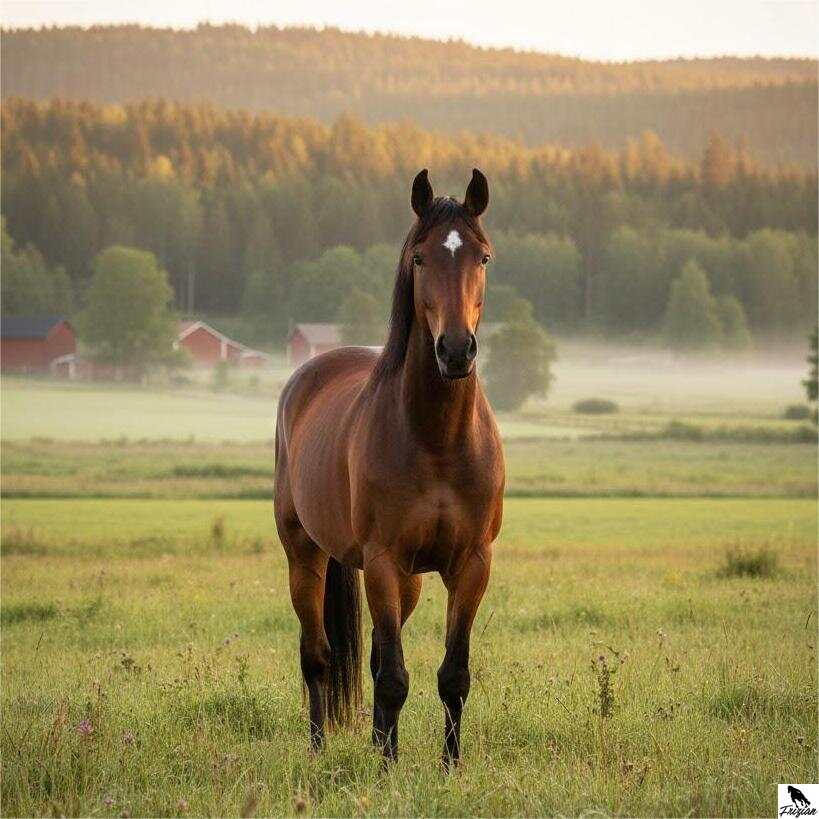
The Swedish Warmblood, also known as the Swedish Warmblood or Svenskt Varmblod, is a warmblood sport horse originating from Sweden. It is prized as a versatile riding and sport horse for disciplines such as dressage, show jumping and eventing. The breed was created by gradually breeding local horses with English Thoroughbreds, Hanoverians and other European breeds, resulting in an athletic, intelligent and willing athlete.
🧬 1. History of the breed
The Swedish Warmblood began to take shape in the 17th century, when noble horses were moved to Sweden for military purposes. In state stud farms such as Strömsholm and Flyinge, local lines were gradually bred with significant contributions from the English Thoroughbred, Hanoverian and Trakehner breeds. After World War II, breeding continued with an emphasis on sporting qualities, which resulted in the modern form of the breed that we know today.
🧍♂️ 2. Physical characteristics
Size and build:
Height: usually 165–170cm at the withers (approximately 16–17 hands).
Weight: approximately 600–650kg in adults.
Appearance:
Refined, intelligent head with expressive eyes.
A long, well-set neck and muscular body with a deep chest and strong hind legs — ideal for sporting disciplines.
Usually in solid shades such as brown, red, chestnut or gray.
These body proportions allow for an excellent balance between elegance and strength, which is key in dressage and jumping.
🐎 3. Temperament and nature
Swedish Warmbloods are known for their balanced and docile character:
Calm, intelligent and willing to cooperate, which makes them suitable horses for both recreational and sporting use.
They are easy to train and respond sensitively to the rider's instructions.
Their balanced temperament is also suitable for less experienced riders, but at the same time they have the spirit necessary for a high level of sport.
Thanks to this combination of character traits, these horses are well suited not only for sports, but also as companion horses for recreational riding.3
🐴 4. Nutrition and breeding requirements
Diet:
A balanced diet based on high-quality hay and feed is the basis — it provides energy for training and good muscle condition.
A balanced supply of minerals and vitamins is especially important for sports-trained individuals.
Breeding conditions:
They require regular exercise and training, ideally daily, to maintain fitness and muscle mass.
The stable should have enough space and good ventilation — important for respiratory health.
These horses are not extremely demanding — they need quality rather than quantity in care.
🩺 5. Health and common diseases
In general, the Swedish Warmblood is a healthy and robust breed, but as with any sport horse, the following applies:
⚕️ Common health problems:
Orthopedic problems - breeding programs try to eliminate genetic predispositions, but general joint problems such as arthritis or weaker joints can arise from demanding sports training.
Osteochondritis dissecans (OCD) - orthopedic disorders of the bones and cartilage occur in large warmbloods.
Gastric ulcers - stress from training and high loads can lead to stomach ulcers.
Metabolic problems - e.g. Polysaccharide Storage Myopathy (PSSM2), in which the horse may experience muscle problems.
Common equine diseases such as colic, respiratory infections, hoof diseases, etc. require prevention even in this breed.
🧑⚕️ Prevention and care:
Regular veterinary check-ups, farriery and dental care.
A stable diet and plenty of exercise help prevent obesity or digestive problems.
🐎 6. Uses and disciplines
The Swedish Warmblood is extremely versatile:
Dressage - excels in sports dressage, often at the international level.
Show jumping and eventing - thanks to harmonious movements and athleticism.
Recreational riding - stability and calm nature make it a great recreational horse.
🏅 7. Advantages and disadvantages
✅ Advantages:
Intelligent and docile temperament - suitable even for less experienced riders.
High sporting potential in dressage, jumping and eventing.
Versatile use - from recreational riding to high-level sports.
Robust health foundation - with proper care, it has a long sporting career.
❌ Disadvantages:
Higher training and exercise requirements – individuals used in sports need regular care and a fitness plan.
Potential for orthopedic problems with intensive work.
Veterinary care and nutrition costs can be higher than for recreational breeds.
🎯 8. How to choose a Swedish Warmblood
When choosing a horse of this breed, consider:
✔ Purpose of use – whether you want a recreational rider, athlete or a combination.
✔ Pedigree and testing – look for horses with a confirmed sporting genealogical history.
✔ Health check – it is important to check the joints, hooves and dental condition before buying.
✔ Temperament – try to find a horse that is willing to cooperate and can handle training.
✔ Fitness and training plan – sporting breeds require a training and care plan from the start.
📌 Summary
The Swedish Warmblood is an elegant and versatile sport horse with a strong genetic foundation and excellent qualities for dressage, jumping and recreational riding. It is relatively easy to breed if given enough exercise, proper diet and veterinary care.