


Spring Restart of Koi Ponds: An Expert Guide to a Successful Season
Added 16.2.2026 18:46.00 Views count 312
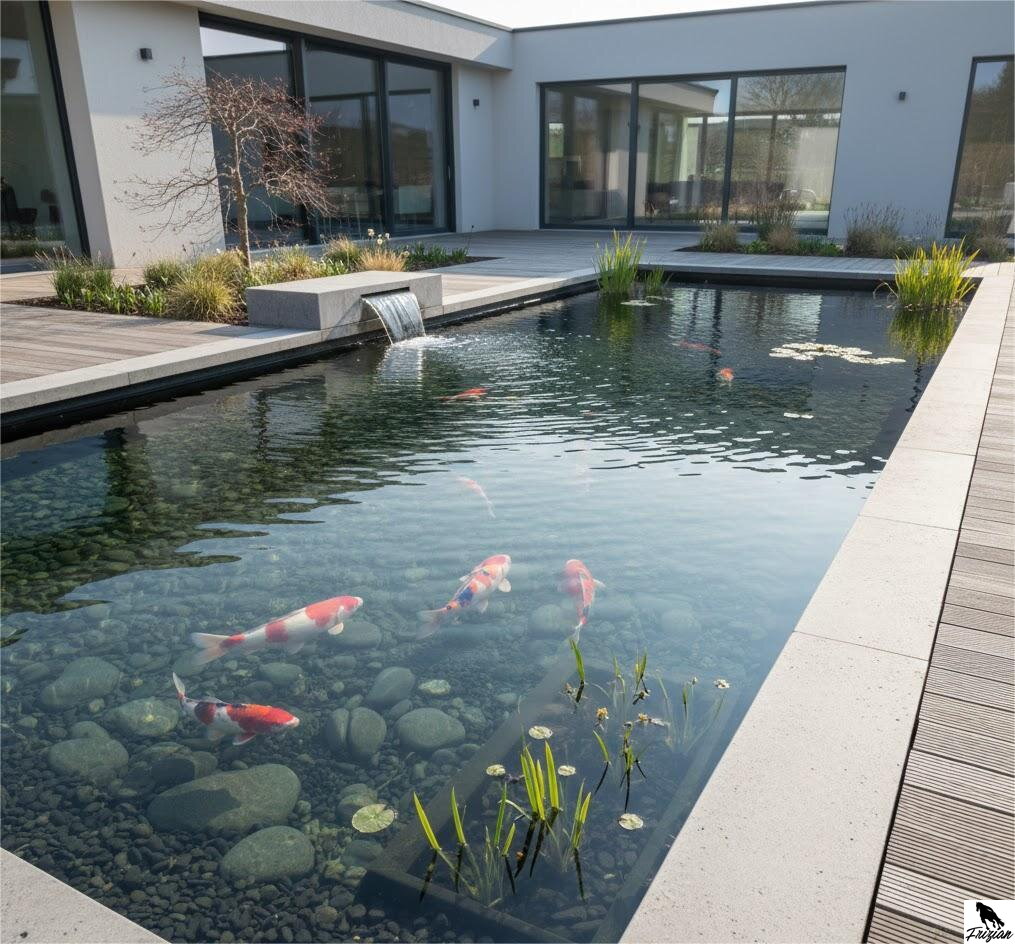
Spring is the most critical time of the year for garden pond owners. The transition from the dormant winter phase to the active growing season brings with it a biological instability that we call “spring syndrome”. The right timing and work process determine whether your pond will be crystal clear during the summer or turn into an opaque “soup” full of algae and sick fish.
1. Timing: When to start?
The most common mistake is starting the technology too early or too late. The key indicator is not the calendar, but the water temperature.
Below 8 °C: Biological processes are almost stopped. The fish are lethargic, filtration would not be effective at this stage.
8 – 10 °C: Ideal time for mechanical cleaning and checking the technology.
Above 10 °C (stable): Time to start biological filtration and add starter bacteria.
2. Mechanical cleaning and technology check
Before you turn on the pumps, you must remove winter deposits from the pond. During frosts, sediment accumulates on the bottom - plant debris, dust and organic sludge. In warmer water, this waste is a source of dangerous ammonia (NH3) and phosphates, which are the main fuel for algae.
Sludge suction: Use a pond vacuum cleaner to carefully remove sludge from deep areas. However, do not overdo it with water changes - a single change of more than 30% of the volume can cause pH shock and hardness changes in the fish.
Technology review: Check the pump for calcium deposits, rinse the filter media (exclusively with pond water, not chlorinated tap water!) and replace the UV lamp. The fluorescent lamp in a UV sterilizer loses its effectiveness after about 8,000 hours, which corresponds to one season. Even if it is lit, its germicidal effect is minimal after a year.
3. Starting the filtration and microbiology
Biological filtration is not just about the machine, but about living organisms. Nitrifying bacteria (Nitrosomonas and Nitrobacter), which convert toxic nitrites into harmless nitrates, multiply very slowly in cold water.
Expert tip: After starting the filtration at a temperature above 10 °C, apply starter bacteria. This will help the pond get through the period when the fish are already producing waste, but the natural microflora is not yet strong enough. Leave the UV lamp off for the first two weeks after applying the bacteria, so as not to kill them before they settle in the filter.
4. Fish health check and feeding
Fish come out of winter with a depleted immune system. Their metabolism is directly dependent on the ambient temperature.
Visual inspection: Check if the fish have a white coating on their body, lime stains, red spots or if they are rubbing against the pond walls. Spring parasites (such as Costia or Trichodina) attack just when the fish's immunity is at freezing point. Be prepared for Garodactylus parasites, which are very annoying, especially in spring.
Feeding: Start feeding only when the water temperature is stable above 10 °C. Use easily digestible foods such as Wheatgerm or Vital (with wheat germ). Classic high-energy protein foods cannot be digested by fish in cold water, which leads to intestinal inflammation and further water pollution.
5. Water chemistry adjustment and preparations
After winter, the water is often "soft" and has low alkalinity (KH), which can lead to dangerous pH fluctuations.
Testing: Measure the pH values (ideal 7.5 - 8.5), KH (at least 6 °dH) and NH3/NO2 (must be zero).
Stabilization: If the KH is low, add products to increase hardness and pH stability.
Summary of the spring checklist:
- Remove coarse dirt and sludge from the bottom.
- Replace the fluorescent tube in the UV lamp.
- Start the filtration at 10 °C and add starter bacteria.
- Test the water parameters (pH, KH, GH, NO2).
- Start light feeding (Wheatgerm/Vital).
A properly started pond in March and April is a guarantee that during the hot summer months you will enjoy the sight of healthy fish and a clear surface without unnecessary stress and expensive chemicals.