



Schwarzwald-Black Forest Horse
Added 24.1.2026 21:01.03 Views count 264
The Black Forest Horse (German: Schwarzwälder Kaltblut, often called the Black Forest Horse or Schwarzwälder Fuchs) is an ancient German breed of cold-blooded horse from the Black Forest region of southwestern Germany. It originates from the traditional breeding history of local farmers and forest workers who needed a strong, hardy, and versatile horse for both heavy work and everyday use.
📜 Origin and history
The breed has been developing since the beginning of the 15th century in the Black Forest region, where conditions for horses were harsh – steep hills, poor pastures and demanding work in the forest.
The first records of breeding come from the monasteries of St. Märgen and St. Peter, and an official studbook has been kept since 1896.
After World War II, the number of horses fell sharply due to mechanization in agriculture and forestry; in the 1970s, very few breeding mares remained.
The breed is currently endangered and is listed as a protected domestic breed in Germany (e.g. on the pedigree of endangered domesticated breeds).
🐎 Appearance and exterior
The Black Forest Horse is a light to medium draft breed (cold-blood) with characteristic features:
📏 Size and build
Height: usually 148–160cm at the withers for larger cold-blooded horses.
Weight: approx. 500–600kg – robust, but not as heavy as massive draft horses.
🐴 Exterior
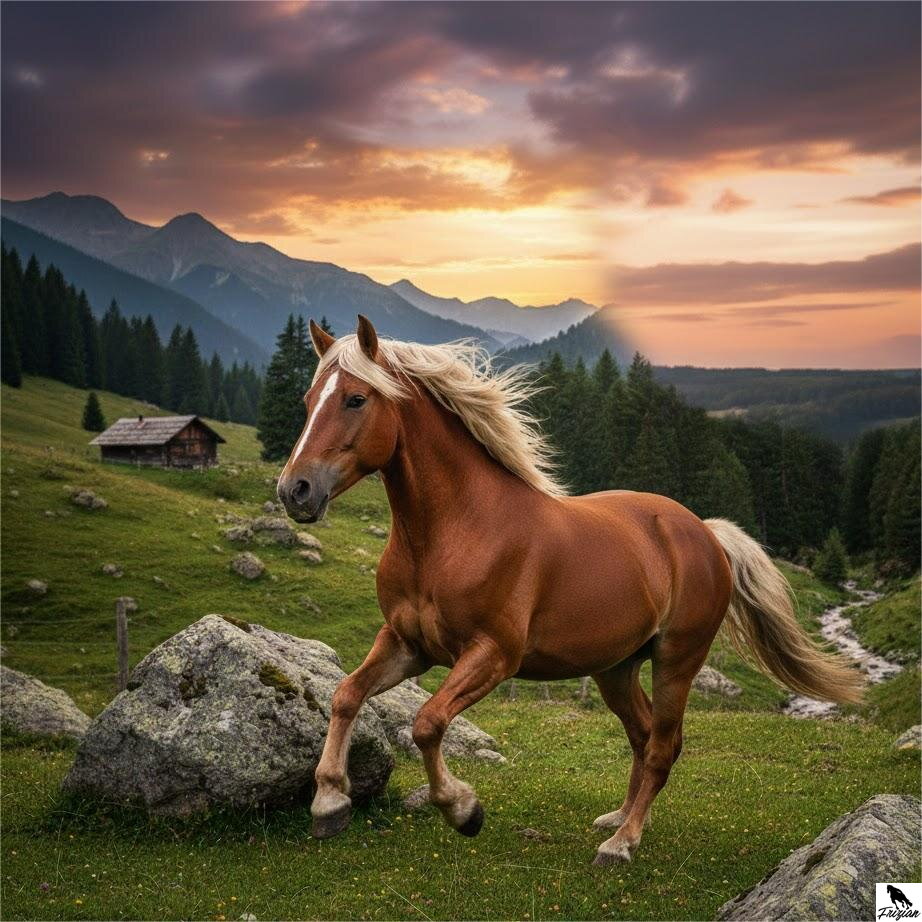
Coat and colour: traditionally dark brown to chestnut with a light mane and tail – so-called flaxen mane (light coat).
Head: short and dry with prominent eyes, small ears and harmonious proportions.
Neck and body: muscular neck, well-shaped shoulders and a strong back line suitable for heavier work.
Legs: Strong, dry legs with wide hooves and minimal feathering (long hair on the legs), which is typical for evaluated draft horses of this size.
In appearance and proportions, the breed is somewhere between a heavy warmblood and a lighter draft, with a strong character and elegance.
🧠 Nature and temperament
The Black Forest Horse is known for its stable, calm and balanced nature:
✔️ Good-natured and friendly: horses are usually very friendly and easily socialize with people and other horses.
✔️ Nervous stable: ideal for working in the forest and in difficult situations - it does not scare easily.
✔️ Intelligent and docile: it learns commands quickly and responds well to training.
✔️ Lively temperament: despite its cold-blooded type, it has a lot of energy and is willing to work.
This type of temperament makes the Black Forest Horse suitable for a wide range of people, from experienced farmers to recreational riders and families.
🏡 How they live and what their requirements are
🐴 Environment and housing
They need a spacious stable with good ventilation and a dry floor.
Daily paddock or pasture are essential for their physical condition and psychological well-being.
🍀 Nutrition
Base: high-quality hay and pasture.
Supplementary feed: energy supplements are added during work or higher loads.
Water: available 24/7.
🧼 Care
Hoof care: regular trimming and hoof inspection.
Veterinary care: vaccinations, deworming and musculoskeletal checks.
Daily coat cleaning and skin checks help prevent irritation.
🩺 Health and common diseases
The Black Forest Horse is considered a hardy and relatively healthy type:
✔️ Health strengths
High resistance to harsh conditions: the breed has historically developed in a demanding environment, so it is not used to being frail or prone to common respiratory problems.
Strong hooves and limbs: good in neutral conditions and when working in the field.
⚠️ Common health problems in horses in general
These can occur if they are not given proper care:
Colic: digestive problems with sudden changes in feed.
Laminitis: inflammation of the hoof due to overweight or improper nutrition.
Orthopedic problems: with excessive strain without appropriate training.
However, most of these problems are not specific to the Black Forest Horse and can be minimized with proper breeding.
🐎 Breed types and lines
The Black Forest Horse does not have formal subspecies such as warmbloods, but within the framework of breeding they can be distinguished:
🟡 Traditional forest lines
Less refined, historically used for work in the forest and in the field.
🟢 Modern hobby and riding lines
Selected for light draft tasks, recreational riding and draft work.
These line differences arise from natural breeding focus rather than as officially recognized subspecies.
🌟 Advantages and disadvantages of the breed
👍 Advantages
✅ High resistance and unpretentiousness: they tolerate harsh conditions and less ideal pastures well.
✅ Good nature: calm, docile and suitable even for less experienced breeders.
✅ Versatile use: suitable as workhorses, draft power, recreational riding or driving.
✅ Attractive exterior: dark coat with contrasting light mane is distinctive and aesthetically appealing.
⚠️ Disadvantages
❌ Endangered status: the breed is relatively rare and limited to the Black Forest region with a specific breeding community.
❌ Can be heavier than other smaller warmbloods: not always ideal for complete beginners looking for an easier riding breed.
❌ Requires adequate training: like any draft/cold-blood horse, it needs appropriate handling and training for optimal performance.
🐴 How to choose a Black Forest horse
If you are considering buying or adopting:
Check the pedigree: verify that the horse has a clear line in the breed's studbook.
Veterinary examination: have a professional check the hooves, teeth, muscles and joints.