


Saddle pads for horses – a detailed guide
Added 23.1.2026 11:44.25 Views count 261
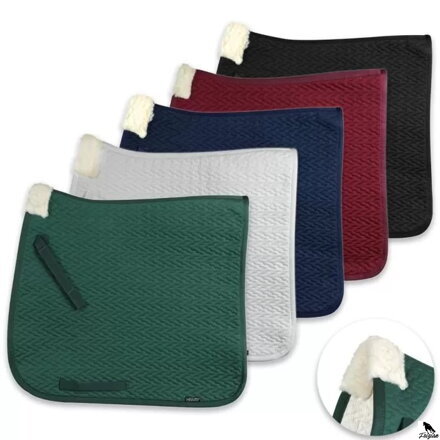
A saddle pad is an integral part of a horse's and saddle's equipment. Its main role is to protect the horse's back from friction and pressure from the saddle, but it also helps to evenly distribute the rider's weight. A properly selected and used saddle pad improves the comfort of both horse and rider and prevents health problems associated with improper pressure on the back.
What is a saddle pad for?
Protecting the horse's back - a saddle pad prevents pressure and abrasions caused by the saddle.
Absorbing sweat and moisture - prevents the saddle from slipping and keeps the horse dry.
Even pressure distribution - supports the correct balance of the saddle and reduces the risk of overloading certain parts of the back.
Saddle stabilization - some types of saddle pads help to better fix the saddle.
How to use saddle pads
Choosing the right size: The saddle pad should exactly follow the shape of the saddle and the horse's back. It should not extend beyond the edges of the saddle.
Placement: Place the saddle pad directly under the saddle, ensuring even distribution.
Checking the position: Before mounting, check that the saddle pad does not pull on the withers or hinder the horse's movement.
Maintenance: After riding, shake out, wash, or clean the seat pad depending on the material to prevent condensation and odor.
Types of seat pads
Seat pads vary in material, thickness, shape, and purpose.
1. Breathable and cotton seat pads
The most common type, suitable for everyday riding.
Advantages:
Adjust well to the shape of the saddle and back
Absorb sweat and dust
Affordable
Disadvantages:
Less pressure-absorbing
Gets wet faster and can get dirty
2. Foam or gel seat pads
Contain memory foam or gel that absorbs shock.
Advantages:
Better back protection
Even pressure distribution
Reduces the risk of abrasions
Disadvantages:
Higher price
May lose shape after intensive use
3. Anatomical and shaped saddle pads
Saddle pads that follow the shape of the back and saddle.
Advantages:
Excellent saddle fixation
Reduces pressure on the withers
Comfortable for long rides
Disadvantages:
Higher price
Requires precise measurement of the horse and saddle
4. Saddle pads with memory foam or air cushions
Modern saddle pads that distribute pressure through special cushions.
Advantages:
Maximum back protection
Ideal for convalescence or sensitive horses
Disadvantages:
Highest price
Requires careful maintenance4
5. Decorative or competition saddle pads
They are mainly used for aesthetics during competitions.
Advantages:
Aesthetically pleasing
Can be a complement to your gear
Disadvantages:
Doesn't always provide enough protection
Focused on appearance rather than function
Benefits of using saddle pads
Reduce the risk of abrasions and bruises
Prevent back and muscle pain
Keep the saddle stable while riding
Improve comfort for both horse and rider
Absorb sweat and moisture, reduce friction
Disadvantages and risks
The wrong size or shape can cause pressure points
Overly thick saddle pads can change the position of the saddle
Some materials can irritate sensitive skin
Requires regular cleaning and inspection
How to choose the right saddle pad
When choosing a saddle pad, you need to consider:6
Saddle type and shape of the horse's back – anatomical vs. universal saddle pads.
Intended use – everyday riding, long rides, competitions or recovery.
Material and thickness – cotton, foam, gel, memory foam.
Size and shape – the seat post should not extend beyond the edges of the saddle or pull on the withers.
Maintenance and durability – some materials can be washed, others can only be wiped with a damp cloth.
Tips for using saddle pads
Always place the pad evenly under the saddle
Before long rides, check your horse for sensitive areas
Clean the pad regularly to prevent odors or mold
For sensitive or older horses, consider an anatomical or gel pad
Avoid over-layering the pads to avoid changing the position of the saddle
Most common mistakes
Using the wrong size or shape of pad
Not cleaning and drying after riding
Over-layering or using thick pads for short rides
Ignoring uncomfortable horse reactions such as movement, jerking or arching the back
Saddle pads are an essential and integral part of the horse and saddle equipment. A properly selected and regularly used pad improves the comfort, health and performance of the horse, preventing abrasions and back pain. When choosing, it is important to consider the type of saddle, the shape of the back, the material and the intended use. Taking care of the saddle pad – regular cleaning and inspection – will ensure the long-term durability and effectiveness of this device.
Tags
- A saddle pad is an integral part of a horse's and saddle's equipment. Its main role is to protect the horse's back from friction and pressure from the saddle
- but it also helps to evenly distribute the rider's weight. A properly selected and used saddle pad improves the comfort of both horse and rider and prevents health problems associated with improper pressure on the back.