



Marwari
Added 24.1.2026 17:47.17 Views count 278
The Marwari is an ancient Indian horse breed originating from Marwar in Rajasthan, India. It is known for its elegantly curved ears, hardiness, intelligence, and history of association with combat and long rides in harsh desert conditions. The tradition of breeding goes back centuries, and today the Marwari is considered a symbol of cultural heritage and a rare horse in breeding circles.
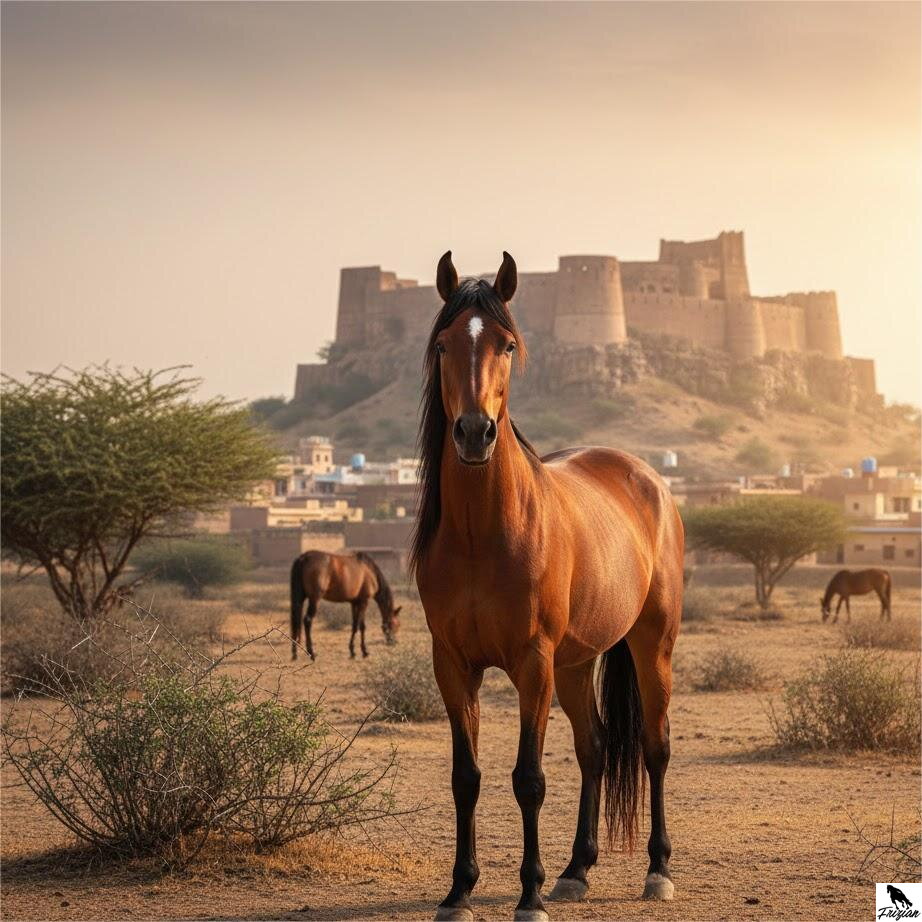
📜 Origin and History
The Marwari originated in the Marwar region (also known as Jodhpur) of northwestern India and was long bred by local rulers, particularly the Rathore dynasty, as a horse for riding, fighting, and desert conditions. The breed was prized for its courage, speed, sense of direction, and ability to endure long journeys over rough terrain.
The Darwinian era of British colonial rule and changes in horse preferences caused the Marwari to decline, but conservation and breeding programs saved it, and today the breed is moderately popular, primarily in India.
🐎 Appearance and physical characteristics
The Marwari is a medium-sized to robust horse, elegantly built and with characteristic ears that roll inwards (and sometimes touch at the tips) – its most distinctive feature.3
📏 Dimensions and body
Height at the withers: approx. 14.2 – 16 hands (≈ 147–163cm).
Weight: usually around 340–450kg (medium build).
Body: elegant, with a long neck, deep chest, good muscle and often a local genetic "metallic" sheen to the coat.
Hooves: small but strong – adapted for riding on a variety of terrain.
🎨 Coat color
The Marwari can have a variety of colors – bay, chestnut, gray, roan and piebald/skewbald. Traditionally, black is considered inauspicious in India and therefore does not qualify as an ideal color.
🧠 Nature and Temperament
The Marwari is known for its intelligence, courage, loyalty and strong sense of partnership with its human.
✔️ Intelligent and docile: learns quickly, responds to gentle aids and is suitable for a variety of riding tasks.
✔️ Loyal and devoted: form strong bonds with their owner and rider.
✔️ Alert and courageous: war and desert horse heritage - not prone to panic or fear.
✔️ Sensitive temperament: requires gentle guidance and consistent work, not aggressive methods.
✔️ Stranger alert: can be reserved or slightly wary around strangers.
These qualities make the Marwari suitable for experienced riders or those who value a deeper connection with the horse, but also family riders after thorough socialization training.
🐴 How they live and their requirements
The Marwari was bred for desert and arid areas, and is therefore hardy and less demanding than many European breeds.
🐾 Environment and exercise
Adaptable: adapts well to hot and dry climates.
Exercise needs: needs enough activity daily - long rides, terrain, exercise, to avoid boredom and frustration.
If stabled, it is important to provide space for free movement and grazing.
🍽️ Nutrition
In its original area, it was fed poor grazing and minimal supplements, so it is used to low-calorie, high-fiber feed.
At home, it can easily gain weight on rich feeds, which increases the risk of metabolic problems (e.g. laminitis).
A modified diet with quality hay and controlled supplementary feed is recommended.
🪶 Care
Grooming: regular combing of the coat, mane and tail, especially due to the thin skin, which is more sensitive to bites and irritations.
Hoofs: regular care and inspection, which helps prevent health problems.
Veterinary care: preventive vaccinations, deworming and dental check-ups.
🩺 Health status and common diseases
The Marwari is generally a healthy and hardy horse, but like any horse it has the potential for common problems:
⚠️ Health problems
Coli: as with most horses - can be caused by an inappropriate diet or sudden changes.
Laminitis: with overweight or high energy diet.
Skin problems: thin skin can be more sensitive to insects or irritations.
Respiratory problems or lameness: with neglected care or training errors - however, they are not specific to this breed.
Adequate nutrition, preventive measures (vet checks) and enough exercise significantly reduce the risk of these problems.
📊 Types and variants
The Marwari is not formally divided into classical sub-breeds, but in breeding there may be various line differences according to regions or family bloodlines (e.g. traditional lines recognized in India), which differ in ear type, height or acting qualities.
Some breeders also highlight gaited individuals (with a natural aside - not every individual exhibits this gait in the same way).
👍 Breed advantages
Advantage Meaning
Amazing history and cultural value The Marwari is considered the national heritage of India.
Elegant appearance and unique ears Visually very impressive and recognizable.
High resistance and endurance Origin in the desert environment has made it hardy and tough.
Intelligence and learning ability Quick learning and trainability.
Strong bond with rider Loyal and devoted partner.
👎 Breed disadvantages
❗ Less suitable for complete beginners - sensitive temperament requires experienced leadership.
❗ Harder to find outside India - the breed is rarer in the world and harder to import.
❗ Reserved temperament - can be wary of strangers or other animals.
❗ Requires care for thin skin - due to more sensitive skin, it needs more thorough grooming.