



Hokkaido pony
Added 24.1.2026 19:18.58 Views count 255
1. Origin and History of the Breed The Hokkaido Pony, also known as the Dosanko, is an ancient Japanese pony breed originating from the island of Hokkaido. It is one of the original Asian breeds that developed through natural selection in the harsh cold and mountainous environment. The breed probably originated from ancient horses imported to the island in the 15th century and subsequently crossed with Mongolian-type horses, giving it robustness and endurance.
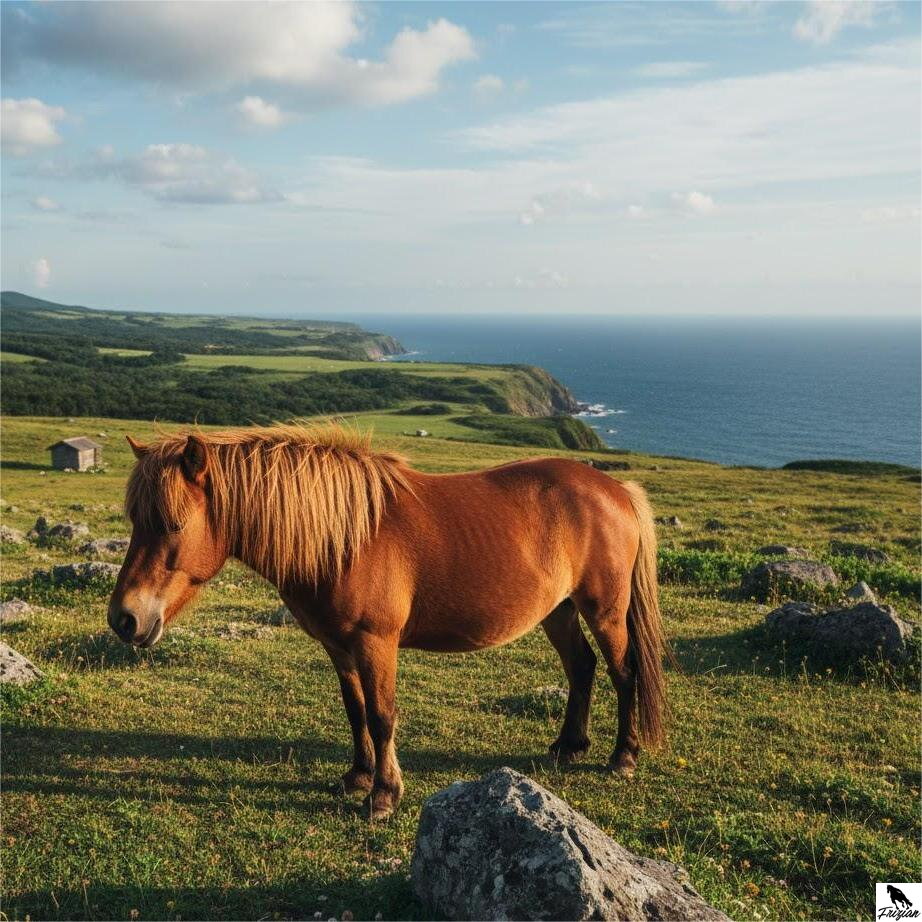
The Hokkaido Pony was traditionally used as a workhorse in mountainous areas, to transport heavier loads where mechanization was not possible, and as a versatile riding partner. The breed is considered genetically rare and some organizations are trying to preserve its original traits and purity.
🐴 2. Appearance and physical characteristics
📏 Height and build
Height at the withers: approx. 132 - 137 cm (13 to 13.2 hands) - belongs to the medium-small pony breeds.
Body build: robust, compact and muscular, with a deep chest and strong limbs.
🐴 Exterior
Head: simple in line, broader and short, with a natural, practical expression.
Neck: short to medium length, well muscled.
Body: solid and massive with a low withers - typical "rustic" proportions.
Hooves: Extremely hard and durable, often not requiring shoeing in traditional breeding.
🎨 Coat Colors
Hokkaido ponies come in a variety of solid colors: chestnut, brown, black, and others, with white markings usually rare or restricted in registration.
The overall exterior reflects a natural adaptation to the cold, wet, and harsh conditions of Hokkaido — the conformation favors endurance rather than speed or athletic ideals.
🧠 3. Temperament and Nature
The Hokkaido Pony has a calm, gentle, and stable nature that has been shaped by the need to survive in a demanding environment:
Calm and even-tempered temperament — they tend not to be violent or nervous.
Pragmatic intelligence — very good at solving simple tasks and learning through repetition.
Good tolerance to stress and climate extremes — adapted to cold, snow, and rough terrain.
Sociable but independent – works with humans, but is not overly expressive or "sticky" like some sporting breeds.
These character traits make them a reliable and patient partner, suitable for traditional tasks, slow-moving riding or field work.
🐎 4. How they live – living conditions and care
🐄 Nutrition
The Hokkaido Pony is a typical "easy keeper" – they do not need a lot of feed and thrive on more modest grazing. Excessive feeding could cause metabolic problems, so the diet often consists of high-quality hay and pasture, with a minimum of rich forage.
🏕️ Environment
These ponies were developed for cold and harsh climates, so they tolerate low temperatures and winter conditions well.
Although their thick coat provides natural insulation, they still need access to shelter and a dry place to sleep.
Conversely, hot climates can be challenging and require additional shade and cooling.
🐾 Care
Hoofs: Although naturally hard, regular hooves trimming by a professional is important for balance and healthy movement.
Coat and Grooming: The dense double coat is brushed regularly, especially during seasonal shedding, to prevent knots and skin problems.
Veterinary Care: Vaccinations, deworming, and dental check-ups are standard breeding routine.
🩺 5. Health and Common Diseases
The Hokkaido Pony is a genetically robust and healthy breed — thanks to natural selection and relatively low breeding intensity, it has a lower tendency to inherit genetic diseases than many modern sporting breeds.
⚠️ Health Risks
Despite their generally good health, Hokkaido ponies can suffer from common equine problems:
Coli and digestive problems – if their diet is changed suddenly.
Laminitis – if they are overfed with rich feed.
Injuries from hard terrain or working in difficult conditions.
However, these problems are not breed-specific and can be prevented with proper care.
🐴 6. Hokkaido Pony Types and Varieties
There are no official "varieties" within the Hokkaido pony (Dosanko) breed like there are with some European breeds – the breed is relatively uniform and standardized according to its historical and practical attributes.
Some informal distinctions may exist between individuals more oriented towards hard field work and those more used as riding ponies for leisure riding, but these differences are not officially classified in the studbook.
🏅 7. Breed Uses
The Hokkaido Pony is a versatile breed, although it is not typical for modern sports such as show jumping or dressage:
🐄 Traditional work
Drag work in the mountains — carrying supplies and heavier loads where machines cannot reach.
Agricultural work — a traditional utilitarian role.
🐎 Riding and recreational use
Recreational riding and hiking — thanks to its stable temperament and solid body structure.
🐾 Cultural role
Preserving history and gene pool — the breed is considered an important part of Japanese heritage and is protected from the loss of genetic diversity.
📊 8. Advantages and disadvantages of the breed
✅ Advantages
✔ Excellent resistance to cold and harsh climates — ideal for more northern areas.
✔ Robust health and genetic strength — lower tendency to hereditary diseases.
✔ Strong and hard hooves – often do not need intensive shoeing.
✔ Calm, patient nature – suitable for riders of all levels.