



Garden pond pumps
Added 25.1.2026 12:12.30 Views count 261
The pump is the heart of the circulatory system of every garden pond. Without the right pump, no filtration, waterfall, fountain or biological water balance can function. It is a device that maintains the water flow, ensures oxygenation, co-creates water effects and optimizes the work of filtration systems.
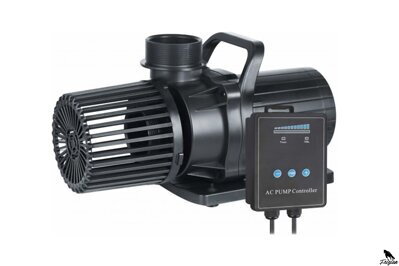
🧠 How pumps work
Pumps transform electrical energy into water flow. Main elements:
Rotor / impeller – rotates, sucks in water and pushes it out.
Motor – drives the rotor.
Outlet / pipe – water continues to the filter, fountain or waterfall.
Simplified:
💡 The pump takes water from the pond → pumps it into the filter or decoration → the water returns clean and oxygenated.
🏠 Why is water flow important
Water flow affects:
✔️ Water oxygenation – fish and bacteria need oxygen.
✔️ Activation of filtration systems – filtration only works when there is flow.
✔️ Temperature stabilization – no hot or cold "dead zones".
✔️ Waste removal – debris does not stick to the bottom.
🛠️ PUMP REQUIREMENTS
⚡ Electricity and power
Basic pumps operate on 230 V (household).
Some small or pond pumps can be on 12 V (safer low electricity).
💧 Submergence / location
Submersible pumps: placed directly in the water - ideal for indoor and smaller ponds.
External / inline pumps: out of the water - connected to the pond with hoses.
🌞 Moisture protection
Pond pumps are waterproof (IP68 or similar marking).
🧼 Maintenance
Cleaning the rotors and strainer.
Regular inspection of hoses and seals.
Rinsing according to clogging.
🧱 TYPES OF PUMPS
1️⃣ Submersible pumps
Most common for small and medium ponds.
✔️ easy installation
✔️ quiet when submerged
✔️ cheaper
❌ more difficult to maintain if deep in the pond
❌ can become clogged with sediment
2️⃣ External / Inline pumps
These are located outside the pond, water flows to them through hoses.
✔️ easy service and access
✔️ quiet when installed correctly
✔️ suitable for larger systems
❌ require additional piping
❌ can be noisier if placed incorrectly
3️⃣ Filter pumps
These are often pressure pumps that are directly connected to complex filters (slot, bead, drum).
✔️ combined solution - filtration + flow
✔️ strong performance
❌ higher price
❌ requires correct sizing
4️⃣ Decorative fountain pumps
Smaller, designed for fountains and water effects.
✔️ aesthetic
✔️ easy installation
❌ low flow
❌ not suitable as a main pump for filtration
🏋️♂️ How they directly affect the health of the pond
🩺 Positive effects
✅ better oxygen dispersion in the water
✅ reorganization and temperature distribution
✅ stabilization of biological filtration
✅ prevention of bottom rot and stagnation
✅ reduction of algae formation
❗ Negative consequences of improper use
❌ too strong current - stress for the fish
❌ insufficient flow - stagnation, rot
❌ poor placement causes unwanted "dead zones"
❌ clogged rotor = reduced performance
🦠 Common pump problems
🔍 clogged rotor
Cause: deposits, mud, algae
Solution: clean the rotor and strainer, rinse with water
🛑 Overheating or jamming
Cause: insufficient water cooling
Solution: check the location, ensure flow around the pump body
💦 Leaks or leaks
Cause: damaged seals, hoses
Solution: replace seals or hoses, use correct couplings
🔕 Noise
Cause: clogged bearings, surface contact vibrations
Solution: place on anti-vibration pads, clean
📊 How to choose the right pump
1️⃣ According to the size of the pond
➡️ choose a capacity (l/h) at least 3–6× the pond volume per hour as a guideline.
Example:
2 m³ pond → min. 6,000–12,000 l/h
5 m³ pond → min. 15,000–30,000 l/h
2️⃣ Depending on the type of system
✔️ with filters → higher performance, good pressure pump
✔️ with fountains/waterfalls → performance + delivery head
✔️ recirculation only → medium performance
3️⃣ Energy efficiency
✔️ lower consumption = long-term savings
✔️ pumps with performance control
❌ older / cheap models may be inefficient
4️⃣ Noise
Quiet models are advantageous for ponds near residential areas.
5️⃣ Durability and material
Stainless steel, hard plastic - UV and weather resistant.
O-ring seals for long service life.
📦 Typical selection checklist
Criteria Recommendation
Pond size 3–6× volume/h according to the number of fish
Pump type submersible / external / pressure
Head at least the height of the filter / decoration + reserve
Material stainless steel / UV-resistant plastic
Energy efficiency yes
Low noise
💡 PRACTICAL TIPS
✔️ Do not run the pump without water - it will be damaged.
✔️ During longer breaks, remove the rotor and check it.
✔️ When combined with a filter system, ensure a pre-filter against large sludge.
✔️ Use a check valve if the pump is above the surface to avoid power losses.
🧭 SUMMARY
Pumps are the "engine" of every healthy pond.
Without water flow:
water stagnates
algae proliferates
bacteria die
fish become stressed
The right pump:
✔️ ensures optimal flow
stabilizes filtration
✔️ increases oxygen capacity
reduces sludge and algae problems
Tags
- The pump is the heart of the circulatory system of every garden pond. Without the right pump
- no filtration
- waterfall
- fountain or biological water balance can function. It is a device that maintains the water flow
- ensures oxygenation
- co-creates water effects and optimizes the work of filtration systems.