



Frameless Saddles for Horses
Added 23.1.2026 12:20.48 Views count 248
Frameless saddles are a modern type of riding saddle that do not have a traditional wooden or metal tree (frame) and instead use synthetic materials or flexible structures. This type of saddle is designed to maximize the horse's comfort, allow for even weight distribution, and provide greater flexibility in movement.
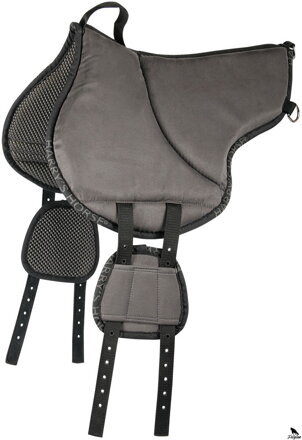
Frameless saddles are suitable for hobby riders, recreational riding, cross-country riding and long rides, with some models also suitable for training or school dressage.
What are frameless saddles for?
Flexibility: The saddle adapts to the shape of the horse's back, minimizing pressure points and the risk of injury.
Comfort: The rider has a softer and more comfortable seat, the saddle absorbs the horse's movement.
Horse protection: Even weight distribution helps reduce pressure on the spine and muscles.
Lightness: Frameless saddles are often lighter than traditional saddles, which reduces the load on the horse.
How to use frameless saddles
Choosing the right size: The saddle must sit on the horse's back and allow a comfortable position for the rider.
Saddle pad: A high-quality saddle pad is used that absorbs sweat and protects the horse.
Girth and breastplate: The saddle is fastened so that it is stable, but at the same time does not restrict movement.
Fit check: Before riding, it is necessary to check that the saddle does not pinch the withers or the back of the back.
Maintenance: Cleaning and maintenance depend on the material (synthetics are easier to clean, leather needs balm or oil).
Types of frameless saddles
1. Synthetic frameless saddles
Made from modern materials such as plastic or laminated fibers.
Advantages:3
Light and flexible
Affordable
Easy to maintain
Disadvantages:
Less traditional look
Some models may be less durable with intensive use
2. Leather frameless saddles
Modern construction without a tree, but with high-quality leather for comfort and aesthetics.
Advantages:
Elegant appearance
Comfort for the rider
Adaptation to the shape of the horse
Disadvantages:
Higher price
Requires regular maintenance
3. Flexible multifunctional saddles
Saddles designed for a combination of dressage, jumping and cross-country riding.
Advantages:
Universal use
Comfortable for long rides
Flexible adjustment to the horse
Disadvantages:
Less suitable for high specialization
Higher price
4. Cross-country saddles without skeleton
A more robust version designed for long rides and expeditions.
Advantages:3
Great stability when moving in terrain
Lightweight construction
Luggage carrying capacity
Disadvantages:
Less suitable for dressage or precision disciplines
Some models have limited aesthetics
Advantages of non-skeletal saddles
Better adaptation to the shape of the horse's back
Even weight distribution
Comfort for both rider and horse
Lighter and more flexible than traditional saddles
Easier maintenance of synthetic models
Disadvantages and risks
Not always suitable for highly specialized disciplines
Require regular check of the saddle fit
Some models may be less durable with intensive use
Leather models have a higher price and maintenance requirements
How to choose the right non-skeletal saddle
Type of horse: The saddle must adapt well to the shape of the back.
Rider Level: Beginners may prefer saddles with more stability, while experienced riders will appreciate the flexibility.
Material: Synthetics – lightweight and low-maintenance; leather – elegant and comfortable, but more maintenance-intensive.
Intended Use: Recreational riding, cross-country, dressage, or a combination.
Saddle Pad and Fastening: A quality saddle pad and properly fastened girth are key to comfort and stability.
Saddle Testing: Always try the saddle on a specific horse to make sure it doesn't slip or pinch.
Tips for use
Always use a suitable saddle pad
Check the fastening of the saddle pad and breast pad
Clean the saddle after riding and treat the surface according to the material
Regularly check the saddle for pressure points
For long rides, choose saddles with greater comfort and stability
Most common mistakes
Incorrect choice of saddle size or shape
Ignoring the horse's reactions
Insufficient fastening of the saddle pad
Insufficient maintenance, especially with leather models
Frameless saddles are a modern alternative to traditional saddles that are lighter, more flexible and more comfortable for both horse and rider. They are ideal for recreational riding, off-road, long rides and combined disciplines. The right choice of saddle depends on the breed of horse, the level of the rider, the material, the purpose of use and testing the saddle on a specific horse. Regular maintenance and fit checks will ensure a long life for the saddle and comfort for the horse.
Tags
- Frameless saddles are a modern type of riding saddle that do not have a traditional wooden or metal tree (frame) and instead use synthetic materials or flexible structures. This type of saddle is designed to maximize the horse's comfort
- allow for even weight distribution
- and provide greater flexibility in movement.