



Exmoor pony
Added 24.1.2026 14:53.24 Views count 272
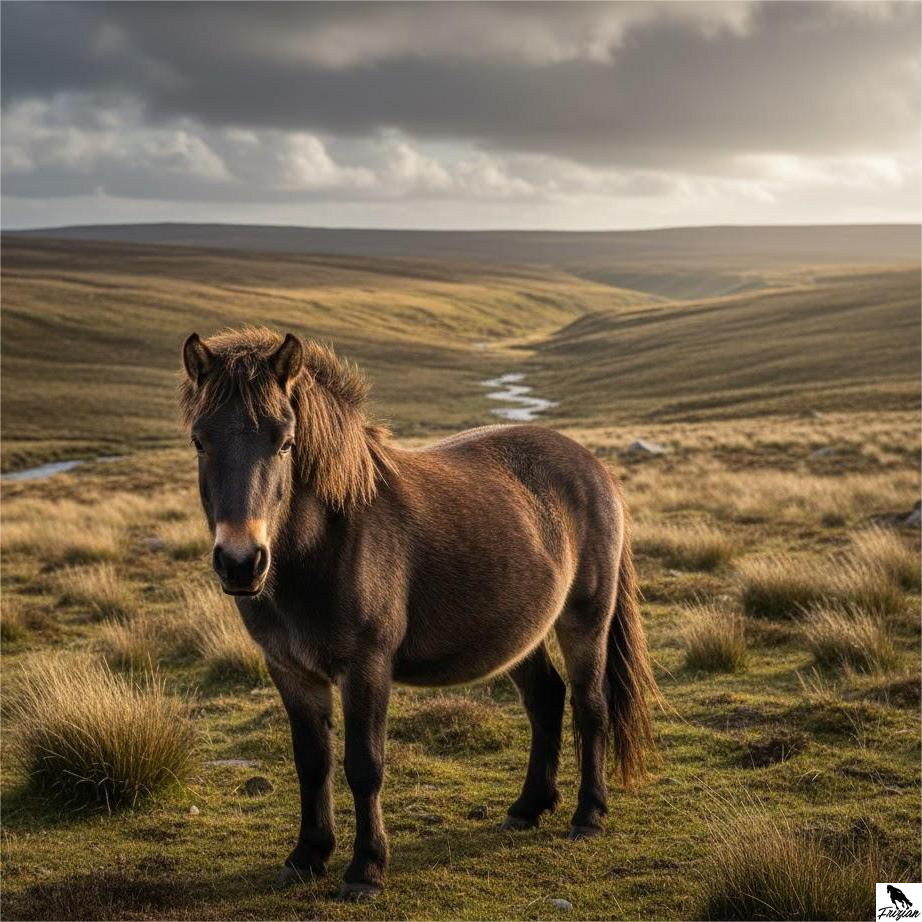
The Exmoor Pony is an ancient British pony breed, often considered one of the most primitive and genetically pure pony breeds in Europe. It is characterized by its exceptional resistance to harsh conditions, ancient traits and versatile nature.
🌍 Origin and History
The Exmoor Pony originates from the Exmoor National Park in southwest England, where it has lived on vast heathlands and pastures for thousands of years. The breed has probably been isolated from other horses since before the iron mining era, which has allowed it to retain its unique genetic and physical characteristics.
These ponies have never been massively crossed with other breeds, so they have retained the authentic characteristics of their ancestors.
They were almost extinct during World War II, and at one point only a few dozen individuals remained - today there are several thousand in breeding and reserves.
3
🐎 Appearance and Physical Characteristics
The Exmoor Pony is a smaller but very robust pony:
📏 Size and build
Height at the withers: approximately 114–130cm (11.1–12.3 hands).
Compact, strong body with a deep chest and short, strong legs.
The head is short with a broad forehead and prominent "toad eyes" — the extra skin above the eyes protects against rain and wind.
🧥 Coat and Color
The coat color is predominantly brown, bay or dun with characteristic "mealy" (lighter) markings around the eyes, nose and flanks.
The winter coat is a dense double layer — a fine insulating layer under the thick outer hair that repels water.
🐾 Hooves
The Exmoor Pony has naturally hard and healthy hooves that are adapted to rough terrain and tend to be less demanding to shoe.
🐴 Nature and Temperament
The Exmoor Pony has a combination of wild instincts and a friendly nature, which makes it a great companion:
🧠 Personality Traits
Intelligent and observant: learns quickly and can adapt to different situations.
Independent but loyal: may be reserved with strangers at first, but with trust becomes a reliable partner.
Calm temperament: usually even-tempered and suitable for children, youth and adults for recreational riding.
Social in the herd: strong group interactions and stable social bonds are typical for them - if the pony lives in isolation, it can get bored.
🩺 Health status and common diseases
The Exmoor Pony is generally a healthy and hardy breed, but proper care is also important here:
🧠 Health strengths
High natural resistance: its genetic makeup and evolution in a harsh environment give it strong immunity and resistance to climatic influences.
Long life: often lives to 30 years or more with proper care.
⚠️ Common Health Challenges
Obesity and Laminitis: Like many "easy keeper" ponies, overfeeding can lead to obesity and hoof inflammation.
Metabolic Syndromes: Exmoors may be at increased risk of metabolic syndrome if fed an inappropriate diet.
Common equine diseases (colic, dental problems, tendon or joint problems) occur when care or diet is not optimal.
👉 Regular veterinary check-ups, dental care, deworming and supervision of diet are key to the health of the Exmoor Pony.
🐎 Life, care and demands
🐾 Environment and social needs
Exmoor ponies do best in a free range, ideally with the possibility of grazing in a herd and shelter from wind or bad weather.
In domestic conditions, it is advisable to ensure regular exercise and contact with other horses.
🍽️ Diet and Nutrition
As an "easy keeper" pony, they do not need a very rich diet — good quality hay and controlled grazing are best to prevent obesity.
Some home environments require limited access to rich grass (e.g. through a shepherd's mask) to reduce the risk of laminitis.
🧼 Hoof and coat care
Although they have naturally strong hooves, regular trimming or a farrier's check is important.
The thick winter coat requires occasional combing and supervision to prevent skin problems.
🐴 Uses and typical activities
The Exmoor Pony is a versatile and practical pony:
✔️ Riding and recreation: suitable for children, youth and smaller adults for touring.
✔️ Driving and light draft work: can work in a driving harness and assist with light tasks.
✔️ Conservation grazing: used in the maintenance of nature reserves and pastures for biodiversity.
✔️ Public events and heritage programs: often used in conservation projects and public education.
Types and variations
The Exmoor Pony as a breed does not have many official varieties — it is registered as a genetically unique type with no significant crossbreeding with others. The main differences between individuals are height and weight within the allowed standard size.
🟢 Advantages of the Exmoor Pony
✔️ High resilience and adaptability
✔️ Low dietary and care requirements
✔️ Versatility in recreational and practical activities
✔️ Stable, intelligent nature
✔️ Important genetic and conservation importance
❗ Disadvantages and challenges
❗ Risk of obesity and laminitis with inappropriate diet
❗ Potential independence that requires consistent leadership
❗ Smaller height limits heavier riding or heavier loads
❗ Necessary social environment and exercise for good psychological well-being
🐎 How to choose an Exmoor Pony
If you want to buy or adopt an Exmoor Pony, pay attention to these steps:
Verification of origin and pedigree record