


Estonian Native Horse
Added 24.1.2026 18:18.33 Views count 246
The Estonian Native Horse (Eesti hobune) is an ancient breed originating from Estonia and dating back to the Middle Ages. It is considered one of the oldest breeds in northeastern Europe and was bred primarily for farm work, riding, and draft. In the past, it was used for agricultural work, but also as a horse for military purposes.
🧬 Origin and history
The Estonian native horse has tangible historical roots dating back to the Middle Ages, when it was bred for agricultural work, transport, heavy riding and local mobility. While Estonian horses were already traveling to Russia and elsewhere as part of trade in the 14th–15th centuries, the first attempts at formal breeding and selective registration date back to after World War I.
In 1921, a studbook was established in Haapsalu, leading an official effort to maintain the original type against the massive crossbreeding that threatened the native population during the 20th century. The most tragic period came during the Soviet era, when the breed type was almost displaced by larger and heavier horses for mechanized agricultural work. Isolated populations on the islands of Saaremaa and Hiiumaa helped preserve the breed.
Today, the number of individuals is estimated at approximately ~2,700 purebred horses, and although it is still considered an endangered breed, its numbers are increasing thanks to conservation efforts and support from Estonian and European organizations.
🐎 Appearance and Body Structure
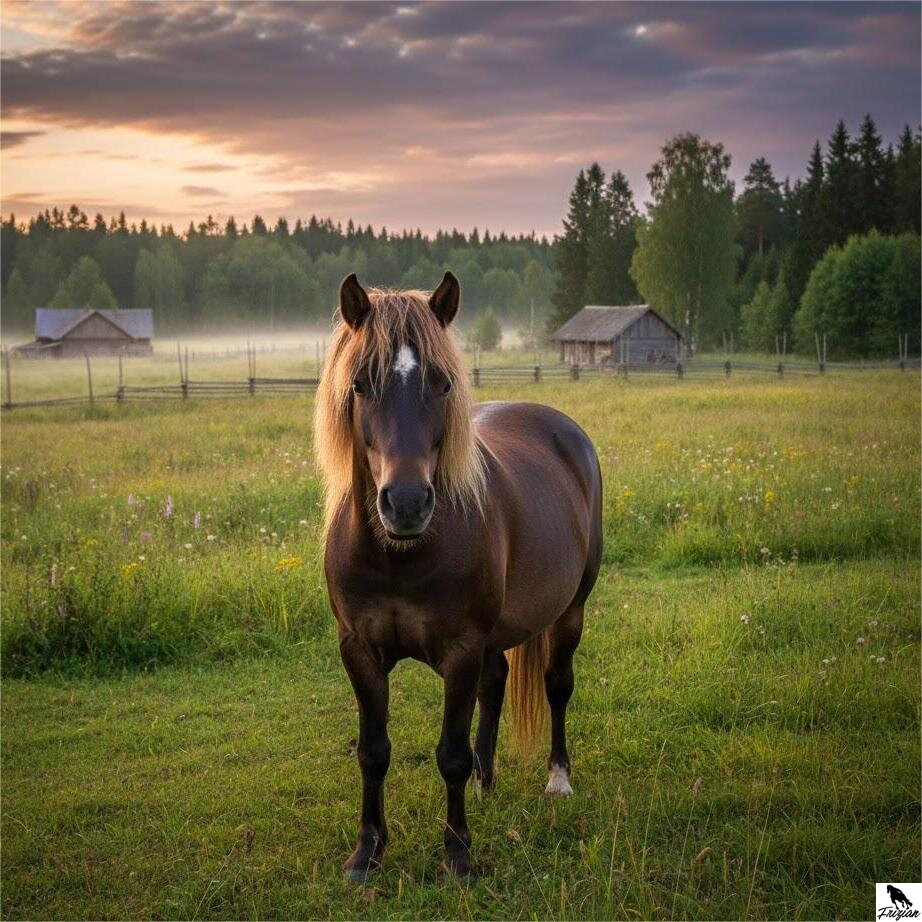
The Estonian Native Horse is a medium-sized horse or large pony with a robust, compact constitution and physical features adapted to the harsh northern climate:
📏 Height at the withers: usually 135–145 cm, but can be slightly higher (e.g. 147 cm according to other sources).
⚖️ Weight: approximately 350–500 kg, depending on sex and type.
Conformation:
Head: broad and solid with large eyes and a lively expression.
Neck and body: muscular neck and broad deep chest for strength and endurance.
Legs: strong and short, with excellent joints and strong tendons.
Hooves: hard and durable, often left bare due to their natural hardness.
Coat colors: typically bay, black, chestnut, gray, but dun, roan, and buckskin/cremello can also appear.
The Estonian horse may also have archaic features, such as a dorsal stripe or shoulder girdle, which are remnants of primitive ancestors.
🧠 Nature and Temperament
The Estonian Native Horse is generally considered friendly, calm, and docile, but also lively and active:
✔️ Calm, stable temperament: also suitable for family riding and children.
✔️ Willing and easy to train: responds well to gentle guidance and is docile for both working and recreational use.
✔️ Energetic at work: has a natural desire to work and is active in tasks such as pulling, driving or touring.
✔️ Adaptable: works well in a group or herd and reacts calmly in a variety of environments.
This temperament makes the breed suitable for a wide range of riders — from beginners to advanced, and for a variety of uses from family riding to touring and sporting activities.
🏡 How they live and their requirements3
🐴 Environment and breeding
The Estonian Native Horse is resistant to the cold and damp climate typical of the Baltic, easily coping with long winters and humid summer months.
Grazing: meets its needs most of the year.
Paddock: necessary daily exercise for healthy muscle and weight balance.
Stabling in winter: provides protection in very low temperatures and windy conditions.
🍽️ Nutrition
The Estonian horse does not have high demands on feed:
✔️ Good grass and hay cover most of its nutritional needs.
✔️ It does not need special energy supplements unless it is in intensive work.
✔️ Excellent digestibility and use of live food means low feeding costs.
🪶 Care and grooming
Regular combing: maintaining coat quality.
Hooves: trimming as needed, often without horseshoes.
Veterinary examinations: vaccinations, deworming and dental check-ups.
🩺 Health status and common diseases
The Estonian native horse is considered very healthy and robust among breeds, thanks to genetic variability and natural selection over centuries.
🟢 Health strengths
✔️ Excellent resistance to common equine diseases, including respiratory and skin problems.
✔️ Durable hooves: rarely suffer from laminitis or defects, often left barefoot.
✔️ Mobility and physical condition: healthy legs and joints, often with a long lifespan.
✔️ High immunity: adaptation to cold and harsh climates increases resistance.
✔️ Longevity: many individuals remain active up to 25–30 years.
⚠️ Common health challenges
Despite their robustness, common problems can occur that are not unique to this type:
Colic when changing feed suddenly.
Muscle strain when exercising excessively.
Skin irritation in extremely humid conditions if a dry place is not provided.
These risks can be effectively prevented by careful nutrition and preventive veterinary supervision.
📊 Breed Types and Variants
The Estonian Native Horse does not have traditional "subspecies" like some warmblood breeds, but we can distinguish:
🔹 Horses from Saaremaa and Hiiumaa: often living in a semi-wild mode and closest to the original type.
🔹 Breed lines: bred according to modern standards for versatile use (riding, draft work, tourism).
🔹 Color variations: the breed has a wide range of colors, although the character of its exterior is consistent.