



Connemara pony
Added 24.1.2026 19:10.31 Views count 281
Origin and History of the Breed The Connemara Pony originates from the Connemara Valley on the west coast of Ireland. It is the only truly Irish native pony breed with a history that goes back centuries. The original ponies of the region were bred to be hardy animals able to survive harsh weather conditions and poor grazing. They were gradually crossed with Arabian, Barbary, Spanish and later with English Thoroughbreds and Welsh ponies to create a type with excellent character and sporting abilities.
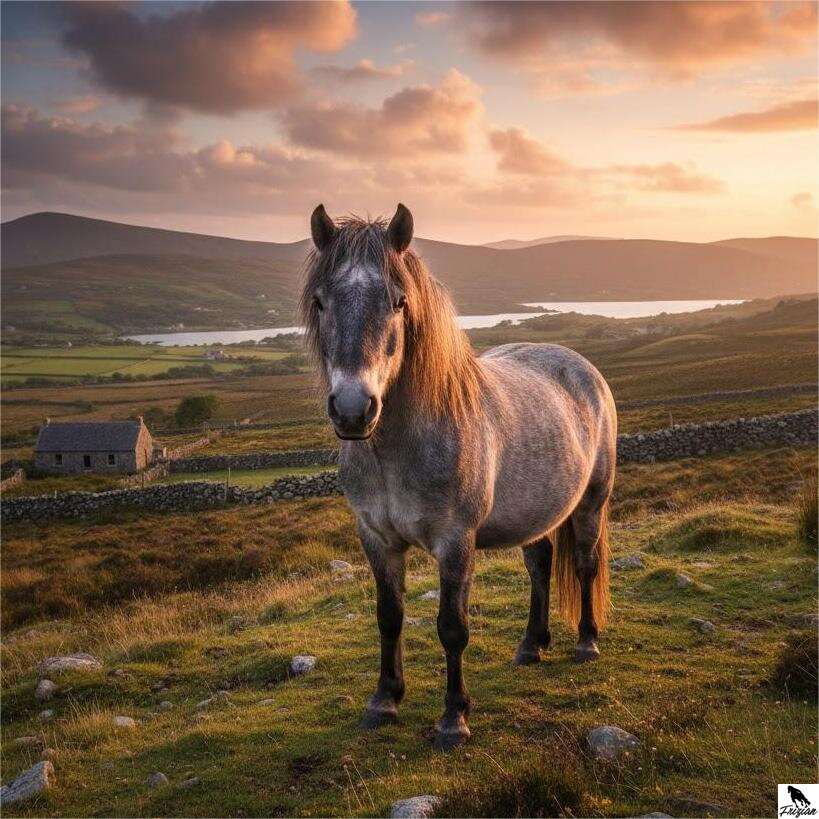
The first Connemara studbook was established in 1904, which helped to standardize the exterior and character of the breed and ensure its consistent breeding.
🐴 2. Exterior and physical characteristics
📏 Size and proportions
Height at the withers: approximately 128–148 cm (12.2 to 14.2 hands).
Type: A compact, well-muscled pony with an athletic conformation and good gait.
🐴 Body and exterior
Head: Fine, with a broad forehead and large eyes, often with a friendly expression.
Neck: Long and well set.
Body: Deep chest, solid body with good back and rump structure.
Legs and hooves: Strong, dry bones and hard hooves contribute to their resistance on a variety of terrain.
🎨 Coat Color
The Connemara comes in a variety of colors:
gray (most common), fawn, bay, black, dun, palomino, and occasionally roan.
This combination of athletic build and hardy exterior makes the Connemara Pony a breed that is suitable for sport, work, and everyday riding.
🧠 3. Nature and Temperament
The Connemara Pony is known for its even-tempered, intelligent, and docile temperament:
Friendly and patient - good with children and family riding.
Intelligent and cooperative - quick learner and enjoys solving problems.
Independent and sometimes reserved - has a strong instinct for self-preservation and can be wary in unfamiliar surroundings.
Sociable and easy to handle if well socialized and trained.
Thanks to this combination of character traits, the Connemara is suitable for beginners and advanced riders, children and adults, and is also able to handle various tasks from recreational riding to sports disciplines.
🐎 4. How they live - living conditions and care
🐄 Nutrition
The Connemara Pony is an "easy keeper" - it does not need much feed and is able to thrive on poorer pasture. Excessively rich feed can lead to obesity or metabolic problems, so its diet needs to be carefully monitored.
🏕️ Breeding conditions
Free range and grazing: ideal for maintaining fitness and mental health.
Roof and shelter: especially important in winter or extreme weather.
Exercise and training: regular activity maintains muscle tone and musculoskeletal health.
🩺 5. Health and common diseases
The Connemara Pony is generally a healthy and robust breed, but there are some risks you should be aware of:
⚠️ Genetic and specific health problems
Hoof Wall Separation Disease (HWSD): a hereditary disease in which the hoof wall breaks and peels, which can lead to chronic lameness. It is a breed-specific genetic disorder and testing of horses is required for breeding.
Laminitis: inflammation of the layers of the hoof, often related to metabolic problems or excessive feed, especially on rich pastures.
Equine Metabolic Syndrome (EMS) and insulin resistance: predisposition to metabolic disorders that increase the risk of laminitis.
🐾 Other health aspects
Tendency to obesity if not adequately fed and exercised.
Common equine problems such as colic and skin allergies can also affect the Connemara Pony, but with proper care they are no more common than other breeds.
🧑⚕️ Prevention and Care
Genetic testing for HWSD carriers when planning a breeding.
Regular hoof care and veterinary check-ups.
Balanced diet and exercise to prevent obesity and metabolic problems.
🐴 6. Types and Varieties of the Connemara Pony
Unlike some other breeds, the Connemara does not officially have multiple "types" or subspecies of the breed. However, there are different types within the standard, which may differ slightly in exterior, body size or riding type:
📌 1. Traditional "classic" Connemara
The breed that most closely resembles the historical type - a robust, tightly muscled pony with excellent endurance.
📌 2. Modern Sport Type
Breed with an emphasis on better movement, jumping skills and athletic performance for sports disciplines such as dressage or show jumping.
Both types meet the breed standard, the difference is in the specific characteristics of the horses according to their use (recreational vs. sports).
🏅 7. Use of the breed
The Connemara Pony is a universal breed that is used in various areas:
🐎 Equestrian disciplines
Jumps, dressage, versatility, eventing - thanks to athletic abilities.
Fox hunting, endurance and off-road riding - their durability and ability to move on difficult terrain is an advantage.
🐄 Work and everyday use
As a riding pony for children and adults, also for recreational riding.
Sleigh and lighter farm work - also suitable for a two-horse team or wagons.
👨👩👧 Family horse
Thanks to its calm nature, it is also popular as a family pony for children and beginners.
📊 8. Advantages and disadvantages of the breed
✅ Advantages
✔ Balanced and docile temperament, suitable for a variety of riders.
✔ Versatility — from riding to jumping to working in a harness.
✔ Robust, healthy constitution and good resistance to weather.
✔ Low requirements for feed and care compared to large horses.
✔ Long life and good family compatibility.