



Chaps for riders
Added 23.1.2026 13:40.36 Views count 274
Chaps are an indispensable part of riding equipment, which serves to protect the rider's legs and calves when riding a horse. They are mainly used in combination with short riding shoes or half boots and ensure better contact with the horse, protection against abrasions and stability in the stirrup. Chaps are practical for all disciplines, from dressage, to show jumping, to western riding.
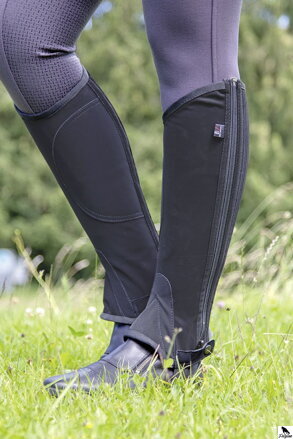
What are chaps for?
Calf and knee protection: Prevents abrasions and bruises when in contact with the horse or saddle.
Leg stability in the stirrup: Ensures firm contact with the horse and better control of the thighs.
Comfort: Chaps protect against wind, rain, dust and dirt.
Technique support: Helps maintain proper foot position, which improves riding balance.
Aesthetics: Professional appearance in competitions, especially in dressage and western disciplines.
How to use chaps
Choosing the right size: Chaps should fit snugly on the legs, but not restrict movement.
Use with footwear: Wear with short riding boots or half boots. Long boots usually do not need chaps.
Putting on: Fasten the zippers or buckles, making sure the chaps fit snugly on the calves.
Riding Use: Suitable for training, longer rides, off-road riding and competitions.
Maintenance: Regularly treat leather chaps with cream, synthetic chaps can be washed with a cloth and dried.
Types of chaps3
1. Leather chaps
Traditional chaps made of high-quality leather.
Advantages:
High durability and durability
Elegant appearance for competitions
Provide firm contact and stability
Disadvantages:
Higher price
Require regular maintenance
May be harder when first used
2. Suede or nubuck chaps
Soft, pleasant leather, ideal for training and recreational riding.
Advantages:
Soft and comfortable
Better fit to the foot
Elegant appearance
Disadvantages:
Lower resistance to water and dirt
Requires care and impregnation
3. Synthetic chaps (softshell, leatherette)
Modern, light and flexible chaps, suitable for recreational riding.
Advantages:
Light and breathable
More affordable
Quick maintenance
Disadvantages:
Less elegant appearance for competitions
Lower durability and strength
4. Western chaps
Typical for western riding, often with decorative trim or tassels.
Pros:
Durable and strong
Protects against terrain and larger turns in western riding
Aesthetically traditional
Cons:
Typically heavier and less flexible
Requires appropriate footwear and care
5. Summer and breathable chaps
Made of lightweight materials for hot weather.
Advantages:
Breathable and comfortable
Lightweight
Suitable for long rides and summer training
Disadvantages:
Less protection against falls or impacts
Can wear out faster
Advantages of chaps
Protect calves and knees from abrasions and injuries
Improve contact with the horse and stability in the stirrup
Provide protection from weather conditions
Promote correct technique and leg position
Professional look for competitions and training
Disadvantages
Higher price of quality leather chaps
Some models may be less comfortable when first worn
Require regular maintenance and impregnation
Synthetic models have a shorter lifespan
How to choose the right chaps
Size: Chaps must fit snugly on the calves, not too loose or too tight.
Purpose: Competition, dressage, show jumping, western or recreational riding.
Material: Leather for competition and durability, synthetic or softshell for recreational riding.
Closure type: Zippers, buckles or elastic panels - depending on comfort and purpose.
Length: Short chaps for half boots, long chaps for traditional boots.
Comfort: Try the chaps on while moving to make sure they don't pull or pinch.
Maintenance: Leather chaps require creaming and impregnation, synthetics are easy to clean.
Tips for use
Wear appropriate footwear (boots or short riding boots)
Check that chaps fit tightly and do not hinder movement
Regularly treat leather chaps with impregnation cream
After riding, let chaps dry and air out
Choose an elegant and conservative design for competitions
Most common mistakes
Wearing the wrong size or type of chaps
Ignoring the material and purpose of riding
Insufficient maintenance of leather chaps
Using chaps with unsuitable footwear
Wearing old or damaged chaps during training or competition
Chaps are a key piece of riding equipment that combines safety, comfort and effective riding technique. The right choice depends on the size, type, material and purpose of riding, while regular maintenance and inspection before riding ensures long-term protection and comfort. Quality chaps improve contact with the horse, stability in the stirrup, and protect the rider from abrasions and discomfort, allowing for safe and efficient riding.
Tags
- Chaps are an indispensable part of riding equipment
- which serves to protect the rider's legs and calves when riding a horse. They are mainly used in combination with short riding shoes or half boots and ensure better contact with the horse
- protection against abrasions and stability in the stirrup. Chaps are practical for all disciplines
- from dressage
- to show jumping
- to western riding.