



Biofoam for garden pond
Added 25.1.2026 11:57.29 Views count 251
Biofoam, also known as biological foam or bio-sponge, is a synthetic porous material used in garden ponds and aquariums as a biological filter. It serves to develop beneficial bacteria that convert harmful substances in the water into less harmful ones, thereby promoting stable water quality and the health of fish and plants.
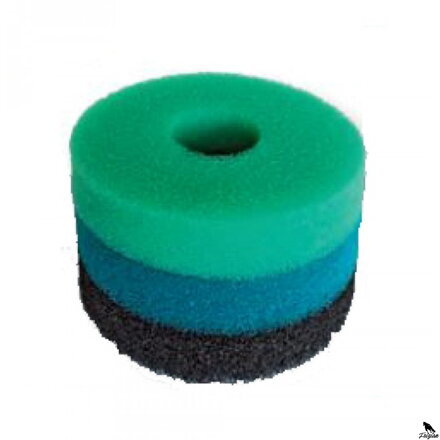
⚙️ HOW BIOMOLYTAN WORKS
1️⃣ Biological filtration
Biomolytan provides a large surface area for the growth of nitrifying bacteria, which convert:
Ammonia (NH₃) → Nitrites (NO₂⁻) → Nitrogen (NO₃⁻)
This process reduces the toxic load in the water and supports the health of fish and plants.
2️⃣ Mechanical filtration
The coarser biomolytan captures larger impurities such as plant debris, algae and fish excrement.
It can be rinsed and reused during regular maintenance.
3️⃣ Ecosystem stabilization
The porous structure allows the formation of a biofilm, which improves the biochemical balance of the water.
Supports a healthy microbial environment, which reduces algae growth and sludge formation.
🏠 BIOMOLYTAN CLAIMS
💧 Water
Biomolytan is suitable for most garden ponds:
Temperature: 4–35 °C
pH: 6.5–8.5
GH/KH: medium to hard water
⚙️ Environment
Place it in chamber filters, pressure filters or separately in filter containers.
It can also be used as an insert in garden waterfalls or skimmers.
🧹 Maintenance
Rinse in pond water or slightly in warm water 1× every 2–4 weeks to remove sludge and maintain beneficial microflora.
Do not use chemicals because they kill nitrifying bacteria.
🧠 CHARACTERISTICS
Passive material - does not consume anything on its own and does not produce toxins
Non-aggressive - does not harm fish or plants
Works only in conjunction with biological life that attaches to it
🧱 TYPES OF BIOMOLYTAN
1️⃣ Coarse molytan
Large pores, captures larger impurities
Used as the first mechanical filtration
2️⃣ Medium molytan
Combination of mechanical and biological filtration
Suitable for most garden ponds
3️⃣ Fine molytan
Small pores, ideal for the growth of nitrifying bacteria
Used in the upper part of the filter or as a bio insert
4️⃣ Combined with bio-chambers
Molytan can be part of multi-stage filters, where the coarse one captures sludge and the fine one supports bacteria
🩺 IMPACT ON HEALTH POND
POSITIVE
✔️ stabilizes water quality
✔️ reduces ammonia and nitrite levels
✔️ supports fish and plant health
✔️ prevents algae and sludge formation
✔️ extends the life of mechanical filters
NEGATIVE / COMMON PROBLEMS
❌ clogged foam can reduce filtration efficiency
❌ beneficial bacteria die when cleaned in water with chlorine or chemicals
❌ unsuitable material can release dust or chemical residues
⚖️ ADVANTAGES AND DISADVANTAGES
👍 ADVANTAGES
✅ highly efficient biological filter
✅ supports a healthy microbial environment
✅ easy maintenance - rinse and reuse
✅ compatible with various types of garden ponds
✅ water and frost resistant
👎 DISADVANTAGES
❌ requires the presence of nitrifying bacteria - does not filter chemically on its own
❌ clogged foam can cause flow slowdown
❌ with improper maintenance efficiency may decrease
🛒 HOW TO CHOOSE THE RIGHT ONE
Pore size – coarse for mechanics, fine for biofiltration
Filter type – pressure, chamber, separate – depending on the location in the pond
Quantity – depending on the volume of water and the number of fish
Material quality – without chemical additives, stable and non-toxic
Maintenance – simple, rinse once every 2–4 weeks
📌 Tip: the combination of coarse and fine biofoam is ideal for larger garden ponds where you want to optimize mechanical and biological filtration at the same time.
🧭 PRACTICAL TIPS
When using it for the first time, it is advisable to rinse the biofoam with pond water to remove dust.
Do not use chemicals or chlorinated water when cleaning.
In combination with biofilters and pressure filters, it can significantly reduce algae formation.
Regularly check that the filter elements do not become clogged with sludge, which reduces efficiency.
📌 SUMMARY
Biomolytan is a versatile and effective material for biological filtration of a garden pond.
Supports the growth of beneficial bacteria and stabilizes water quality
Filters mechanically and biologically
Easy to maintain, frost and water resistant
Choosing the right type and maintenance are key for maximum effect
Tags
- Biofoam
- also known as biological foam or bio-sponge
- is a synthetic porous material used in garden ponds and aquariums as a biological filter. It serves to develop beneficial bacteria that convert harmful substances in the water into less harmful ones
- thereby promoting stable water quality and the health of fish and plants.