


Betta Splendens- Siamese fighting fish
Added 14.11.2022 16:30.59 Views count 1161
Betta splendens, one of the most well-known and sought-after ornamental fish in aquariums, has a continued success story, with new colors and shape variations constantly appearing, making it very popular worldwide.
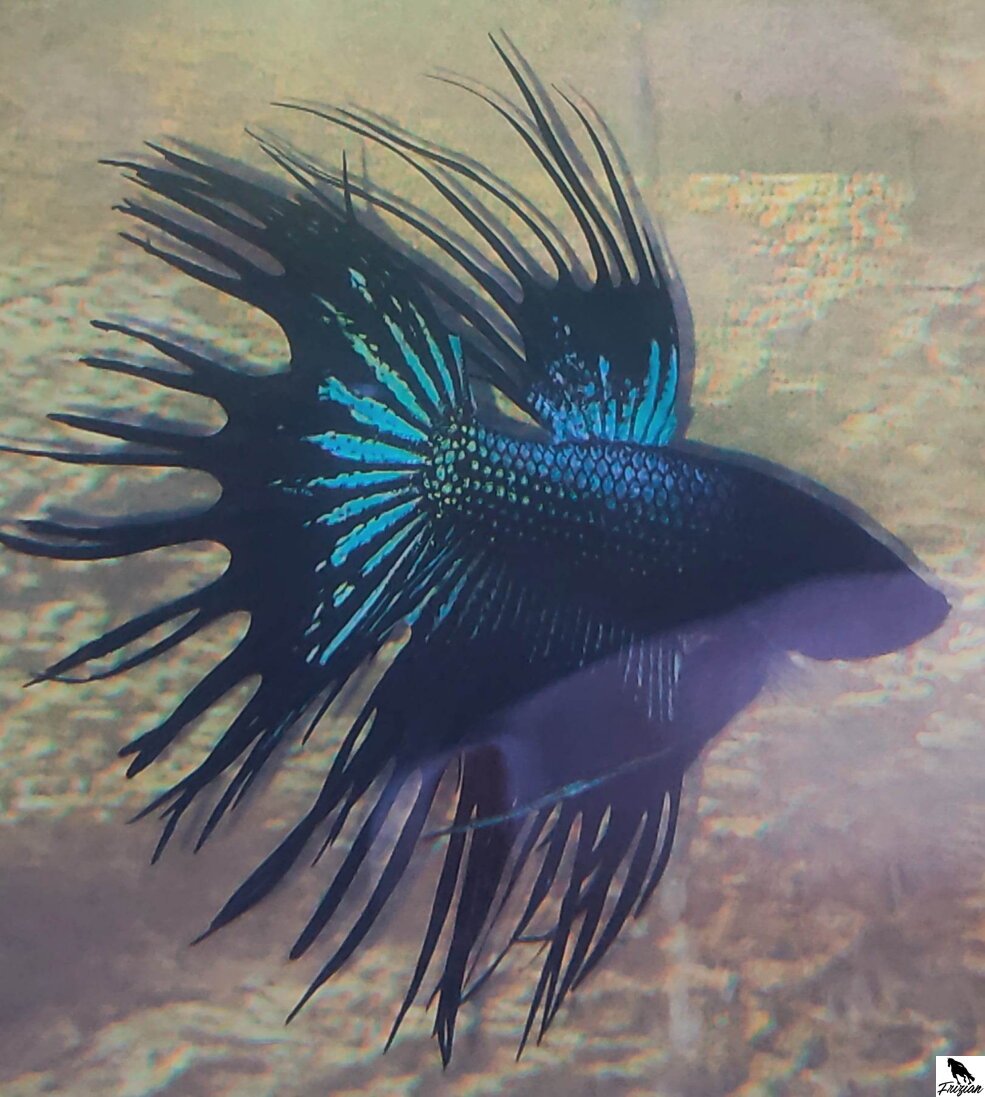
The Siamese fighting fish owes its name to the aggressive behavior of the males towards each other. It should already be said that it is an incredibly peaceful fish when it comes to most other fish species, so don't be fooled by its name! On the other hand, a male can react violently to another male. Experience also shows that in larger aquariums of several hundred liters, several males can be kept side by side without any significant problems. In its homeland of Thailand, Siamese fighting fish mainly inhabit flooded rice fields, swamps and marshy areas. In any case, we are talking about stagnant or perhaps only slowly flowing waters that are heavily overgrown with floating vegetation. It is usually found in warm and oxygen-poor waters. For these conditions, its labyrinth organ is of great use, which can compensate for the poor oxygen content in the water by breathing from atmospheric air. During dry periods, rice fields are often a formidable trap for fish; sometimes the water disappears completely, for a short time a puddle with a height of about 3 cm and a temperature of up to 35 ° C can provide a home for the Betta. The reason for its resistance and wide tolerance can be found in the harsh natural conditions of its native habitats.
betta
Siamese fighting fish are best kept alone or in the company of only a few social fish. You could put 2-3 females together next to one male, although many experiences show that it is much more advantageous to keep the sexes separately. In some cases, females can be a little aggressive towards each other, especially in confined spaces, although the intensity of this behavior is nowhere near that of Betta males. The tank for a betta should be well sealed, because if the air above the water temperature is significantly colder than the water itself, the fish could quickly get sick, catch a cold or get a cystitis. It is highly recommended for beginners and is even perfectly suited to small aquariums, where it can be kept alone or in the company of a dwarf armored catfish. The legal minimum of 30 liters is more than enough for a male betta! Do not keep your betta in an overcrowded aquarium.
It should not have a significant water flow from the filter unit and no strong water movement caused by the water flow of the filter or other water movement devices. Plant the aquarium abundantly and use some floating plants.
Most descriptions recommend a neutral environment for bettas (6.5 - 7.5 pH), which makes it suitable for its care. However, the acidity in nature varies slightly from this. A pH of around 6 is ideal. Preferably keep them in soft or medium-hard water, but many bred versions have already adapted well to slightly harder water, such as tap water. Fighting fish prefer warm conditions; a temperature of between 25-27 °C is recommended for keeping. For breeding purposes, it is advisable to offer them water slightly warmer than 27 °C. They easily tolerate temperatures above 30 °C, which often happens in their habitat
heaters
Their feeding is not demanding. Fighting fish accept a wide range of granular food for ornamental fish and it is also worth offering types of food that enhance the color specially made for fighting fish, which is also available on the market. To maintain the vitality of our fish, we regularly offer mosquito larvae, artemia and other live and frozen food sources. The latter, especially if we are aiming to breed the next generation of beautiful Bettas. Your Siamese fighting fish can easily live for three or even four years with proper care.
Sadly, the Siamese fighting fish is on the verge of extinction in the wild and is now classified as a vulnerable species, with 30% of its population having already disappeared. The main threat to it is environmental pollution, which is leading to the loss of its habitat. Unfortunately, the main area of distribution of the species is heavily polluted and in many cases converted to more responsible agricultural practices. In addition, many aquarium-bred variants have been released into the wild, which is a huge problem. The original wild strain is subject to genetic erosion (mixing of the gene pool of aquarium-bred variants with the original wild form). Artificially bred fish are much more easily preyed upon by predators and have a significantly lower chance of survival than their wild relatives. Therefore, steps must be taken to ensure that the bloodline of the wild strains is not spoiled. Experts believe that it would be crucial to start a breeding program that would also be responsible for the reproduction of the original wild form and at the same time spread it among fish farmers.
The fighting fish has its own demands on water quality, give it a good life and it will repay you with beautiful coloration!