



Barbary Horse
Added 24.1.2026 14:47.14 Views count 283
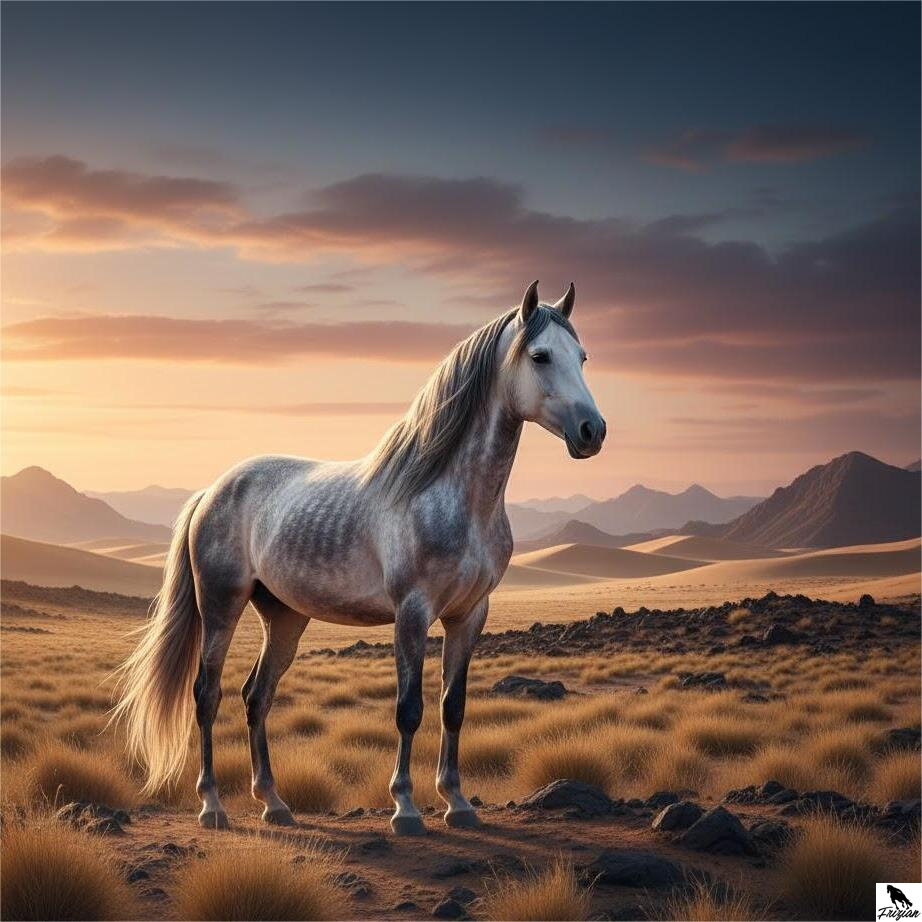
The Barbary horse, often referred to as the Barb or Barbary horse, is an ancient breed of riding horse originating from North Africa — particularly Morocco, Algeria, and Tunisia in the Maghreb region.
🌍 History and Origin
The Barb horse probably originated from the crossing of ancient Germanic horses brought to North Africa by the Vandals with local oriental horses. Later, the Moors and local breeders refined the breed, mainly using Arabians, which gave it its characteristic features.
In the past, the Barb was used as a riding horse, a steel charioteer, and even in war — Hannibal was legendary for using it in battle.
Modern efforts to preserve the breed began in the 1980s, when international organizations were established to protect it, such as the World Organization of the Barb Horse.
🐴 Appearance and exterior
The Berber horse has a typical light riding horse constitution, which was shaped for life in the demanding, dry environment of North Africa:
🐎 Physical characteristics
Size: approximately 145–160 cm at the withers (14.2–15.2 hands).
Weight: around 400–500 kg, compact but flexible body.
Head: medium-sized, often with a slightly concave or vee-profile (so-called "Roman nose").
Hooves: small, hard and very durable — adapted to rough terrain.
Coat colors: most often gray, chestnut, brown or black, but also various shades in between.
The body is dry, muscular and harmonious, with a pronounced chest depth and a well-balanced rump, which adds to its resistance and endurance.
🧠 Nature and Temperament
The Barbary Horse is known for its combination of energy, intelligence and poise:
🧠 Traits
Even and calm temperament: Often described as tolerant and easy to manage, suitable for a variety of riders.
Intelligent and docile: responds quickly to training and works well with its human.
Loyal and sociable: forms a strong bond with its human family and herd.
Strength and endurance: can withstand long rides without tiring, making it a great partner for endurance riding or hiking.
Although mostly calm, it can also have a lively energy and temperament that needs a fair amount of physical and mental work — otherwise it can get bored or become restless.
🩺 Health and Common Diseases
The Barb is overall a very hardy and healthy horse, shaped to handle harsh desert climates:
🩹 Health Benefits
High Hardiness: Good adaptation to extreme temperatures and dry environments.
Strong limbs and hard hooves: Significantly fewer leg problems with proper care.
Long lifespan: Typically 25–35 years with good care.
3
⚠️ Common Health Risks
Metabolic problems from overfeeding: Although they are less demanding on feed, a poorly designed diet can lead to obesity or laminitis.
Parasitic diseases: If deworming is neglected.
Dental or grooming problems: As with all horses, regular veterinary check-ups are important.
The Barb does not have many of the breed-specific genetic diseases that are known in other breeds, which makes its health profile relatively simple and undemanding.
🍽️ Life and Care
🐎 Breeding Conditions
Open space or paddock: ideal for these horses that love freedom of movement and contact with nature.
Socialization: Barb socializes well in the herd and with people, which supports his psychological well-being.
🍏 Diet
Quality hay and pasture: a basis that is sufficient for normal exercise.
Diet according to exercise: for long endurance rides, it can be supplemented with appropriate commercial feed and minerals.
Body condition control: important for preventing obesity and metabolic problems.
🐾 Prevention and health
Regular hoof care, dental check-ups and vaccinations.
Plenty of exercise and mental stimulation — Barbs thrive when involved in regular activity.
🐎 Types and varieties (different traits)
The Barb does not have as many official "types" as some modern breeds, but there are different lines and traits that differ slightly in appearance and use in different regions (e.g. Moroccan Barb, Algerian Barb, etc.).
Some lines have also crossed with other breeds and contributed genetics to Spanish or European riding breeds.
🟢 Breed advantages
✔️ Outstanding resistance and health: naturally adapted to harsh conditions.
✔️ High endurance and ability to perform for long periods.
✔️ Good nature: intelligent, docile, friendly.
✔️ Low maintenance: undemanding to feed and easy to maintain.
✔️ Historical significance: genetically valuable for breeding other breeds.
❗ Disadvantages and challenges
❗ Potential metabolic problems with improper nutrition.
❗ Less common breeding stock: purebred Barbs are relatively rare.
❗ Higher exercise requirements: Lack of exercise can lead to behavioral or health challenges.
🐎 How to Choose a Barb Horse
When buying or adopting, consider:
Origin and documentation: ensure the best possible breeding history.
Health check by a veterinarian