



Bearded Dragon (Pogona vitticeps)
Added 25.1.2026 18:58.21 Views count 292
The bearded dragon, also known as the bearded agama or bearded dragon, is one of the most popular reptiles kept in captivity. This fascinating lizard is native to the Australian deserts and steppes and is known for its friendly nature, intelligence, and relatively easy care requirements. If you decide to keep this animal, you should have basic information about its requirements, health, diet, and behavior.
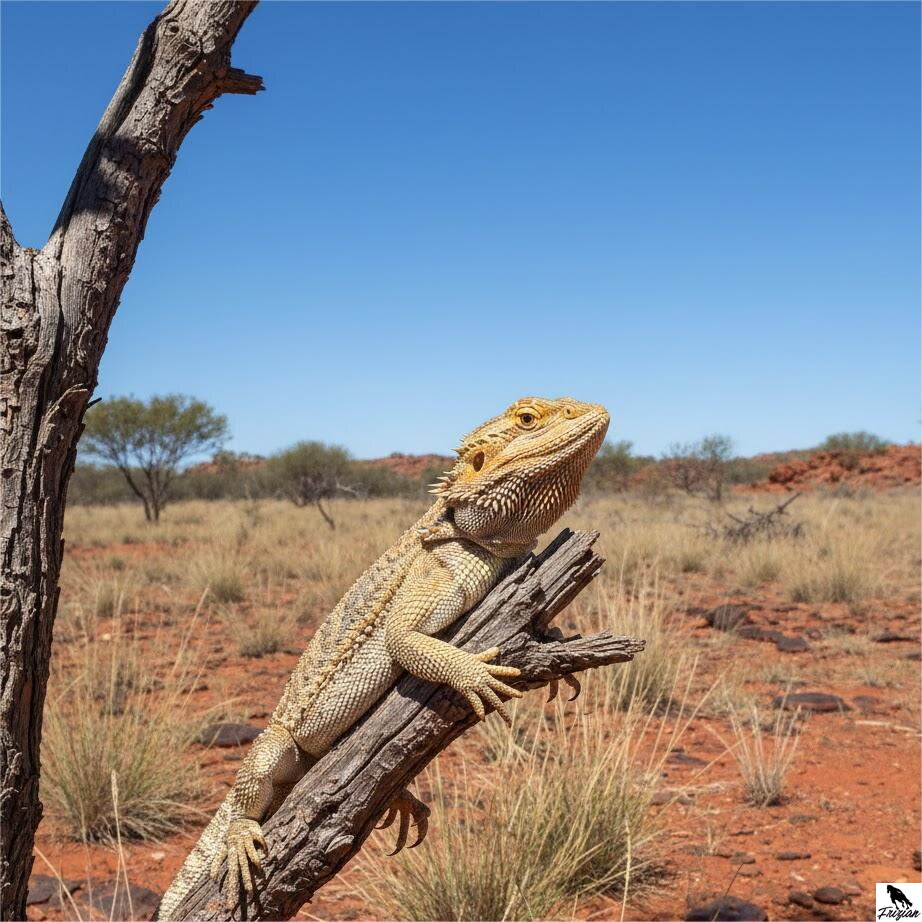
1. Basic overview of the bearded dragon
Name Bearded Dragon
Scientific name Pogona vitticeps
Origin Australia (deserts and steppe areas)
Size 40–60 cm (males tend to be larger)
Lifespan 10–15 years, up to 20 years in captivity
Activity Diurnal, active mainly during the day
Diet Insectivore, herbivore (combination)
Temperament Peaceful, friendly, social
2. Appearance of the Bearded Dragon
The Bearded Dragon is a medium-sized lizard that has gained popularity not only for its charismatic nature, but also for its appearance.
Body and color
Body: Robust and slightly flat.
Skin: Covered with scales. It has characteristic scales on its chin and neck, which expand to form a "beard" shape when startled or when communicating.
Color: Their color varies depending on mood, environment and gender – from brown-gray, yellow, orange to red and green. Some males show brighter colors during courtship.
Size
Adult males reach a length of 50–60 cm, females tend to be smaller, around 40–50 cm.
They have strong legs and a large head, which is characteristic of this species.
Head and beard shape
The biggest feature of the agama is the beard, which can grow on the neck, is covered with scales and serves for communication or protection.
3. Breeding and care of the bearded agama
The bearded agama is relatively easy to breed if it is provided with the right environment, food and regular care.
Terrarium
Terrarium size: For one adult agama, the recommended minimum terrarium size is 120 × 60 × 60 cm. However, a larger terrarium is always better so that the agama can move around.
Substrate: Safe substrate such as reptile carpet, ceramic tiles or paper towels. Avoid sand, which can cause digestive problems if the agama eats it.
Humidity: The Bearded Agama is not fussy about humidity. The recommended humidity in the terrarium is 30-40%.
Temperature:
Daytime temperature: 32-38°C in the warm areas of the terrarium (heating areas).
Nighttime temperature: 22-24°C.
Basking area: The terrarium should have a temperature gradient arrangement, where the warm area is heated and the cooler area provides shelter from high temperatures.
Lighting: The agama needs UVB light for proper calcium metabolism. It is important to provide UVB bulbs (both UVA and UVB), which are essential for bone health and the prevention of metabolic bone disease.
4. Bearded Agama Diet
The Bearded Agama is an omnivore, which means that its diet should consist of insects, vegetables and fruits.
Basic diet:
Insects (80% of the diet of young, 40% of adults):
Crickets
Mealworms (healthy, but occasional)
Green grasshoppers, crickets, whiteflies
Fly larvae, oak worms
Vegetables and fruits (20% of the diet of young, 60% of adults):
Leaves, such as spinach, chard, clover, parsley.
Carrots, pumpkin, cucumber.
Green sprouts, broccoli, peppers, strawberries, melons.
Supplements:
Calcium: Don't forget calcium to prevent skeletal problems. You can sprinkle calcium powder on insects.
Vitamins: Regular supplementation with vitamin D3 and multivitamins is important.
Feeding guidelines:
Young agamas should be fed every day, while adults should be fed every other day.
Try to feed live insects of an appropriate size - smaller than the width of the agama's head.
5. Bearded Agama's nature and behavior
Character:
Amiable and friendly: The agama is known for its calm and friendly behavior. It is an animal that gets used to contact with humans.
Territorial: Males can be territorial and can behave aggressively towards other males, especially during mating. Therefore, it is advisable to keep males separately.
Communication: Agamas use gestures and body posture to communicate. When the beard is spread, it is a sign of defensive behavior or signaling a threat.
Interaction with the owner:
You can hold it and let it be handled calmly, but never push it so that it does not feel threatened. Over time, they can become very tolerant of handling.
If you do pick up an agama, be careful not to create stressful situations for it.
6. Health problems and prevention
Although the bearded agama is hardy, there are a few health problems that can occur if proper care is not provided.
Common health problems:
Metabolic bone disease (MBD):
Cause: Calcium and vitamin D3 deficiency.
Prevention: Make sure your agama is getting enough calcium, preferably in powder form, and that its terrarium contains UVB light.
Parasites and infections:
Symptoms: Weakness, decreased appetite, vomiting.
Prevention: It is important to buy insects from trusted sources and regularly disinfect the terrarium.
Digestive problems:
Symptoms: Constipation or frequent stools.
Prevention: Providing a proper diet and sufficient exercise.
7. Types and variants of the Bearded Agama
There are several variants of the Bearded Agama, which differ in appearance:
Normal (wild) form - the most common color: brown, gray and orange.
Hypo (Hypomelanistic) - individuals with less melanin, have brighter colors.
Translucent (transparent) - have less dark pigments in the skin.
Leatherback (leatherback) - without scaly cover, very smooth skin.
Tags
- The bearded dragon
- also known as the bearded agama or bearded dragon
- is one of the most popular reptiles kept in captivity. This fascinating lizard is native to the Australian deserts and steppes and is known for its friendly nature
- intelligence
- and relatively easy care requirements. If you decide to keep this animal
- you should have basic information about its requirements
- health
- diet
- and behavior.