



Anglo-Norman
Added 24.1.2026 20:18.01 Views count 249
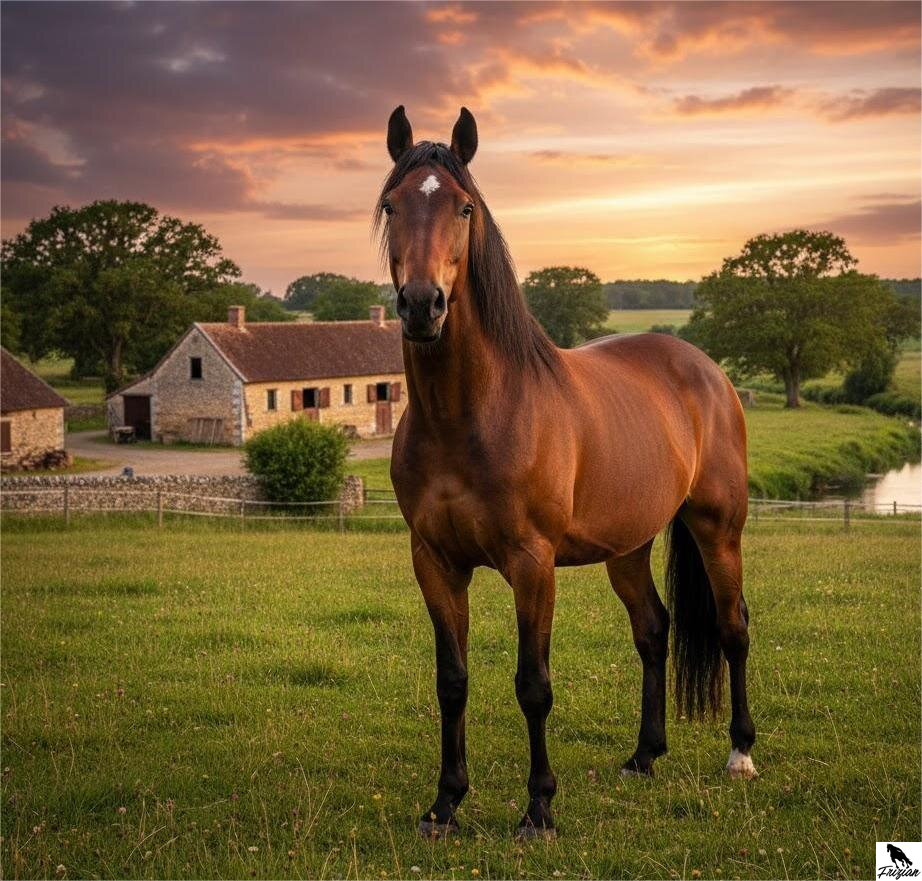
The Anglo-Norman is a breed that originated from the crossing of English Thoroughbreds and Norman horses in the northeastern region of France, especially in the Normandy region. This horse combines excellent athletic ability with sufficient strength and endurance, making it ideal for many equestrian disciplines, especially for horses intended for racing, jumping and endurance riding.
📜 Origin and History
The Anglo-Norman is a warmblood horse breed originating from Normandy in northern France, which began to take shape in the 19th century by crossing local Normandy horses with English Thoroughbreds.
Anglo-Normans were created as universal riding and working horses suitable for saddle, heavier riding, harness and sport.
The breed became the basis for breeding other European breeds - e.g. Norman Cob, Nonius, or contributed to the old French trotters.
In 1958, the Anglo-Norman was officially merged with other French types, thus creating the Selle Français - a modern French sporting breed.
Since the 1990s, breeders have been trying to maintain a pure Anglo-Norman line again, and the stud book was reopened in 2015.
Although the breed was "incorporated" into the Selle Français for a while, many breeders now consider it a separate type with its own standard.
🐴 Appearance and characteristics
📏 Exterior
Anglo-Normans are medium-sized to tall warmblood horses:
Height at the withers: approximately 155–168cm (some individuals even taller).
Body structure: harmonious - long neck, muscular shoulder and rump, well-developed legs.
Head: often slightly convex or straight profile line, intelligent expression.
Coat colors: various - mainly brown, chestnut, but also other classic riding colors are reported.
This body type was created by combining the Norman robustness and the English "lightness" of the saddle horse.
🧠 Nature and temperament
The Anglo-Norman is an intelligent, docile and hard-working horse:
Character: usually calm, stable temperament, but capable of performance and alertness in work or sports activities.
Attitude to people: loyal and willing to cooperate, which makes it a good partner for riders of all levels.
Teachability: very good - likes to learn new tasks and disciplines.
Handling: can be dynamic, but is often patient, which is an advantage especially in riding training.
🐎 Types and lines
Although today many lines of Anglo-Norman horses fall under the Selle Français, historically different types were distinguished based on use and blood:
📌 By function in the past
Trotters (trotters): selected for fast trotting and sporting use.
Trotters and carts: more robust horses suitable for heavier work and teams.
Saddle horses: middle line with a focus on riding.
These differences reflect the historical goal: to adapt the type of horse to a specific job - from riding to classic teams.
🐴 How Anglo-Norman horses live (subsequent conditions)
🏡 Environment
Suitable housing: spacious stable with good ventilation and dry ground.
Run: ideally 6–8 hours a day in the run or on pasture with good fencing.
Social contact: horses are social animals - they benefit from the company of other horses.
🥕 Nutrition
Base: good quality hay and pasture.
Grain/meal feeding: according to workload and condition.
Minerals and salt: available at all times.
🧹 Care
Hoof care: regular hoof care and trimming by a farrier.
Cleaning: daily combing and checking the health of the skin, legs and teeth.
🏇 Movement and task
Horses are suitable for riding, cross-country riding, jumping, dressage and all-round sports - although not every individual will excel in every discipline.
🩺 Health status and common diseases
As a warm-blooded riding breed, the Anglo-Norman is mostly resistant to common diseases if you take care of it properly, but it can have similar health risks as other sport horses:
🐴 Common health risks
✔️ Hoofs: abscesses or overload without proper care.
✔️ Musculo-joint problems: with excessive strain or training.
✔️ Colic: digestive problems when changing food or in a stressful situation.
✔️ Overweight or malnutrition: requires qualified diet adjustment.
📌 Prevention: regular veterinary examinations, hoof care and a balanced diet help minimize risks.
🏆 Advantages and disadvantages of the breed
🌟 Advantages
✅ Versatility: suitable for various riding and working tasks.
✅ Stable, intelligent nature: good cooperation with the rider.
✅ Good sporting use: capable in jumping, dressage and terrain.
✅ Historical value: an important contribution to other breeds.
⚠️ Disadvantages
❌ Not always a uniform type of appearance: historically varied according to breeding.
❌ Higher demands on care during sporting use: they need training and regular care.
❌ May be more "demanding" for some than simple hobby breeds: especially with intensive sporting use.
🐴 How to Choose an Anglo-Norman Horse
If you are considering buying or adopting:
✅ Check:
✔️ Origin and pedigree: verified stud book or documentation.
✔️ Nature and temperament: calm, friendly behavior.
✔️ Health status: veterinary examination before purchase.
✔️ Intended use: hobby riding vs. sport vs. long-term training.
📌 Summary
The Anglo-Norman is a historically significant French warmblood horse that combines strength, elegant body structure and versatility. It is suitable for equestrian sports, working use and recreational riding, if you provide it with adequate care, nutrition and training.