



Amur snake (Elaphe schrenckii)
Added 25.1.2026 20:23.24 Views count 396
Elaphe schrenckii, commonly known as the Amur rat snake or Russian rat snake, is a large, non-venomous snake in the family of snakes. It is popular among terrarium keepers for its flexibility, interesting coloration, and calmer nature, but it also requires specific housing and environmental conditions. Below you will find a comprehensive overview of everything you need to know about this species.
🧬 1. Taxonomy and origin
Scientific name: Elaphe schrenckii
Common names: Amur ratsnake, Russian rat snake, ужовка амурская
Family: Colubridae
Distribution: southeastern Russia (surrounding areas of the Amur River), northeastern China, Korea; in nature, it inhabits moist forests, forest edges, wetlands, field edges and areas near watercourses.
Habitat: semi-terrestrial to semi-arboreal, can climb well and often stays close to the ground even in low branches.
🐊 2. What they look like
📏 Size and body
Adults usually reach 1.2–1.8m in total length; exceptionally over 2m.
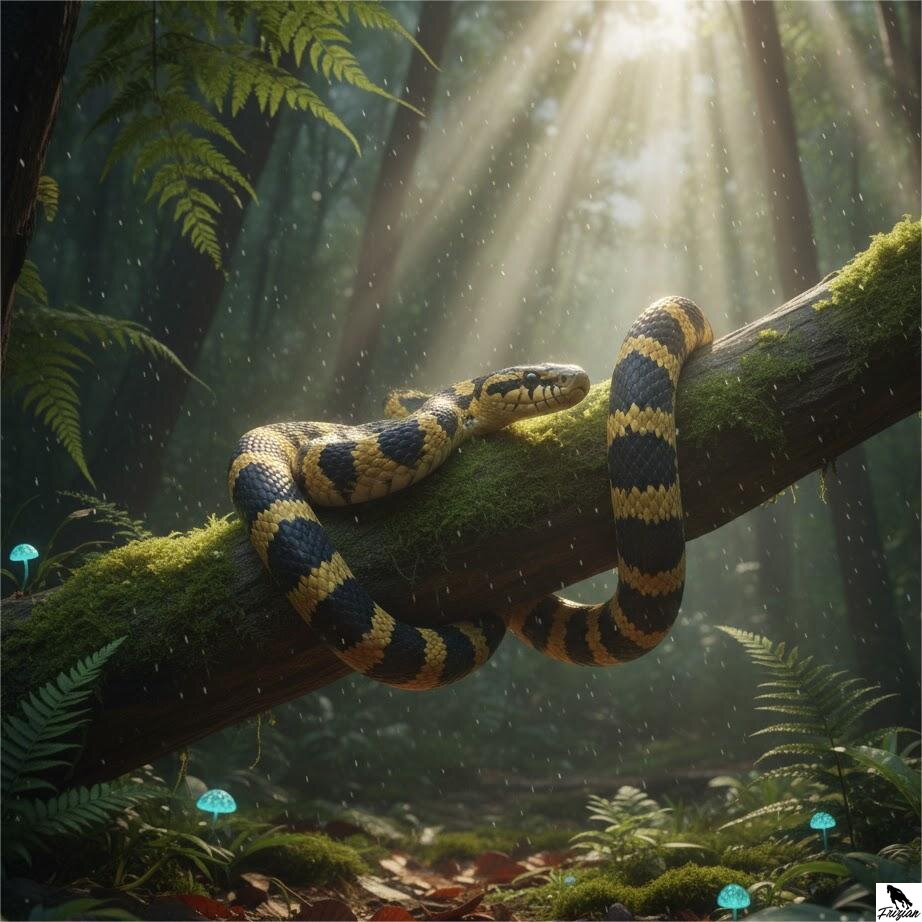
Body: robust, muscular, but elegant; head is clearly separated from the body.
🎨 Color and pattern
The basic color of the back can be dark brown, olive to almost black, with transverse lighter stripes or spots that provide good camouflage in the forest.
The belly is lighter - beige to yellowish with darker spots.
In young animals, the pattern is usually more contrasting and may darken slightly with age.
🐍 Physical characteristics
Eyes with round pupils are typical of non-venomous snake species.
Snakes of this size have a remarkable degree of mobility and muscle strength, which helps them crawl and climb well.
🏡 3. Environmental and breeding requirements
🏠 Terrarium
Minimum dimensions: for an adult individual, experts recommend at least 150×80×150cm (l×w×h), with more space always being better.
The terrarium should have a solid cover and be placed in a quiet place without drafts.
🌡️ Temperature and humidity
Daytime temperature: ideally 22–28°C in the main part of the terrarium.
Local heating point: up to 32–33°C for thermoregulation.
Nighttime temperature: around 18–22°C.
Humidity: 50–70% - maintained with light dew and a moist substrate.
🪵 Equipment and decorations
A substrate of peat, sand and humus helps to maintain humidity and is also ideal for nesting.
Provide hiding places (e.g. roots, cavities), branches for climbing and plenty of space to rest.
A container of water for drinking and occasional bathing is important.
🍽️ 4. Diet and Nutrition
The Amur snake is a carnivore that feeds mainly on small mammals and birds in the wild.
🐁 Food components in captivity
Rodents: mice and small rats - often switch to frozen thawed food.
Occasional supplements: small chickens or chicks, small birds for enrichment.
Feeding frequency: juveniles approximately every 3–5 days, adults approximately every 7–14 days.
Note: avoid disturbing the snake after feeding; movement around fresh food may lead to vomiting.
Vitamins/Minerals: Supplements are recommended with regular feeding, especially for growth of juveniles.
🧠 5. Nature and behavior
🌅 Activity
Amur snakes are mostly diurnal to crepuscular, i.e. active during the day and at dusk.
They are curious and active - they love to investigate the terrarium, sometimes climbing branches and surprising with their movements.
🐍 Temperament
In captivity, they are calm, tolerant and tolerate handling well if they have been used to it since they were young.
With appropriate breeding, they usually do not show aggression - however, it is recommended to use a hook for safety when handling.
Some specimens can be curious and bold, sometimes trying to "explore" their surroundings even outside the terrarium.
🩺 6. Health status and common problems
⚠️ Common health challenges
Problems with shedding: with improper humidity, old skin may not completely close together.
Respiratory infections: at too low a temperature or fluctuating conditions.
Parasites: internal or external - regular veterinary checks are important.
Overweight/obesity: overfeeding can lead to health complications.
🐍 Prevention
Stable terrarium conditions (temperature, humidity, cleanliness).
Proper diet and supplementation.
Regular veterinary checks.
🐣 7. Reproduction and life cycle
Amur snakes reproduce after a period of temperature drop/hibernation, followed by mating.
The female lays 8–15 eggs, which she incubates for about 40–60 days at 26–28°C.
The young measure about 30–35cm after hatching and begin to feed themselves.
Maturity: usually around 3–4 years.
🧬 8. Species / Subspecies
Taxonomically, Elaphe schrenckii is sometimes distinguished into two geographical subspecies:
Elaphe schrenckii schrenckii
Elaphe schrenckii anomala – Northeast Asia (Korean Peninsula)
These differences are more evident in distribution and minor morphological features than in substantially different behaviors.
✅ 9. Advantages and disadvantages of breeding
🟢 Advantages
✔️ Attractive, elegant and interestingly patterned snakes – visually impressive.
✔️ Relatively tolerant and peaceful in captivity if properly socialized.
✔️ Easy to feed rodents, often accepting frozen thawed food well.
✔️ Long lifespan: can reach 10–15+ years in captivity.
🔴 Disadvantages
❗ They need a generous terrarium with well-adjusted temperatures and humidity.
❗ They are not for beginners, but rather for slightly to moderately experienced breeders.
❗ Possible health problems with poor care (respiration, shedding).
Tags
- Elaphe schrenckii
- commonly known as the Amur rat snake or Russian rat snake
- is a large
- non-venomous snake in the family of snakes. It is popular among terrarium keepers for its flexibility
- interesting coloration
- and calmer nature
- but it also requires specific housing and environmental conditions. Below you will find a comprehensive overview of everything you need to know about this species.