


Aka Bekko
Added 25.1.2026 14:39.18 Views count 284
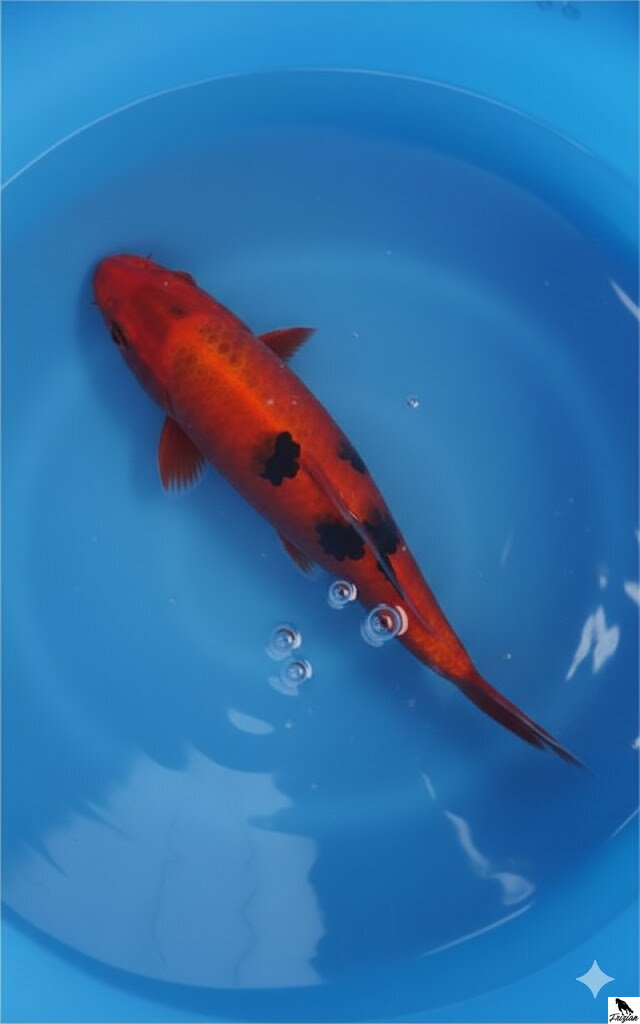
The Aka Bekko is a beautiful variety of koi that belongs to the wider Bekko family and is characterized by its red (Aka) color on a white background. This variety of koi is popular with koi keepers and garden enthusiasts because of its visual appeal and distinctive nature. In this article, you will learn everything you need to know about the Aka Bekko koi, from their appearance to choosing the right care.
Appearance of Aka Bekko Koi
Aka Bekko koi are characterized by a unique color combination that makes these fish very attractive to any breeder. Their basic characteristics include:
🔹 Color and Pattern
Base Color: The main color of the Aka Bekko is red (Aka), which is vibrant and distinctive, covering most of the fish's body.
Sumi (black): Black spots (Sumi) appear all over the body, which are symmetrical or irregular. These black spots are located mainly on the caudal fin, the back of the body or on the head. Unlike the Shiro Bekko, where the dominant color is white, the Aka Bekko has a more pronounced red.
Body: The Aka Bekko's body is symmetrical and slender with a good ratio between body length and fin size. A proper body structure is important for the koi to move smoothly in the pond.
🔹 Size and Shape
Size: Like most koi, the Aka Bekko can grow up to 60–80 cm in length, depending on water quality and nutrition.
Shape: The fish's body is proportionally balanced, which is essential for its healthy growth and long-term vitality.
Aka Bekko Koi Breeding Requirements
🏡 Pond
Pond Volume: Aka Bekko require a pond with a volume of at least 3000-5000 liters of water for one fish, with each additional fish having a minimum of 1000-1500 liters of water.
Depth: The minimum depth of the pond should be 1.2-1.5 meters, with a depth of over 1.5 meters being even better, as it helps with temperature regulation and increases fish movement.
Filtration: Koi are large fish and produce a lot of waste. Therefore, good filtration is key. A combination of mechanical and biological filtration is best for maintaining optimal water conditions. Filters should be strong enough to handle large volumes of water.
💧 Water Quality
Temperature: The optimal water temperature for Aka Bekko is between 15–25°C. In the winter months, if the temperature drops below 10°C, the koi will stop growing actively and their metabolism will slow down.
pH: The fish are comfortable with a pH between 6.8–8.2, with an emphasis on a stable pH value.
Alkalinity (KH) and water hardness (GH): For healthy development, the ideal alkalinity is between 3–5 KH and the water hardness should be 6–10 GH.
Oxidation: The water must be well oxygenated so that the koi have enough oxygen to breathe. This can be achieved by regularly aerating and circulating the water through the pond.
🍽️ Food and Diet
Types of Food: Koi are omnivores and it is best to feed them a high-quality commercial koi food that contains a balanced amount of protein, fat and carbohydrates. Spirulina, vitamins and minerals are important for supporting health and color.
Feeding Amounts: Koi should be fed 2-3 times a day, and you should only give them as much food as they can eat in a few minutes.
Winter: When the temperature drops below 10 °C, it is a good idea to limit feeding, as the koi will no longer be able to digest their food effectively.
Aka Bekko Koi Personality
Peaceful Personality: Aka Bekko koi are known for their calm demeanor. These fish are very friendly and peaceful, making them ideal for community ponds.
Social: Aka Bekko are also very social fish that love to swim in groups. While not extremely aggressive, they can show a bit of dominance, especially if they feel threatened by other fish.
Intelligent and Interactive: These fish are intelligent and are often very interactive, meaning they will often approach the edge of the pond to observe their surroundings or wait to be fed.
Health and Common Problems of Aka Bekko Koi
Aka Bekko koi, like other koi, can suffer from a variety of health problems, especially if optimal pond conditions are not maintained.
⚠️ Common Health Problems
Parasitic Infections:
Koi are susceptible to parasites such as Ichthyophthirius (white spot), Trichodina, and Costia. These parasites cause skin and gill problems.
Prevention: It is important to monitor water quality to minimize stressors that could lead to parasite infestation.
Bacterial Infections:
Infections caused by bacteria such as Aeromonas and Pseudomonas can cause fin rot, skin ulcers and inflammatory diseases.
Prevention: Good water quality, a healthy diet and keeping your fish healthy can help prevent these problems.
Wounds and Injuries:
Injuries can occur from sharp objects in the pond or from aggressive behavior from other fish.
Solution: Regularly inspecting your fish and isolating injured individuals can help prevent infections.
Stress:
Stress can be caused by dirty water, adverse temperature conditions or intense competition between fish.
Prevention: Minimizing stress factors is key to healthy koi.
Advantages and Disadvantages of Aka Bekko Koi
👍 Advantages
Visual Appeal: Aka Bekko koi have a beautiful red color combined with black spots, which makes them very attractive in the pond.
Peaceful and Friendly Nature: These fish are very friendly, which makes them suitable for community ponds.
Longevity: Like most koi